MS WORD FOR EFFECTIVE RESEARCH METHODOLOGY WRITING
1.1 General Information
As a general guideline, the length of the Project Proposal must not exceed 20 pages in 3 chapters.
1.2 Arrangement of Parts/Chapters
The Research Proposal should be in the form of a scientific paper. It should include the following parts in sequence:
Chapter 1: Introduction
1.1 Introduction
1.2 Research Background
1.3 Problem Statement
1.4 Research Objectives
1.5 Research Questions
1.6 Research Hypothesis (optional)
1.7 Significance of study
1.8 Scope/ Delimination
1.9 Limitations/ Constraints
1.10 Operationalized Definitions
Chapter 2: Literature Review
2.1 Introduction
2.2 Concept and Theory
2.3 Empirical Studies
2.4 Research Framework
Chapter 3: Research Methodology
3.1 Research Design
3.2 Sampling Technique
3.3 Questionnaire Design
3.3 Data Collection Procedures
3.4 Data Analysis Procedures
Research Planning (Grantt Chart)
2.1 Normal Type
The total number of pages for the normal type Project Paper is around
60 - 100 pages excluding the Preliminary pages (see para. 3.3 for details) and Appendices.
2.2 Article Type
The article type Project Paper should be written within 20 - 40 pages.
The literature review of article type Project Papers emphasize the
essence derived from the literature review in the project proposal of the preceding semester. The emphasis of the article type Project Paper is on analysis of results and discussion. The article type Project Paper also contains the chapters found in the normal type Project Paper. However, the chapter contents are merged and presented as a single chapter.
2.3 Arrangement of Parts/ Chapters
The Project Paper should be in the form of a scientific paper. It should include the following parts in sequence:
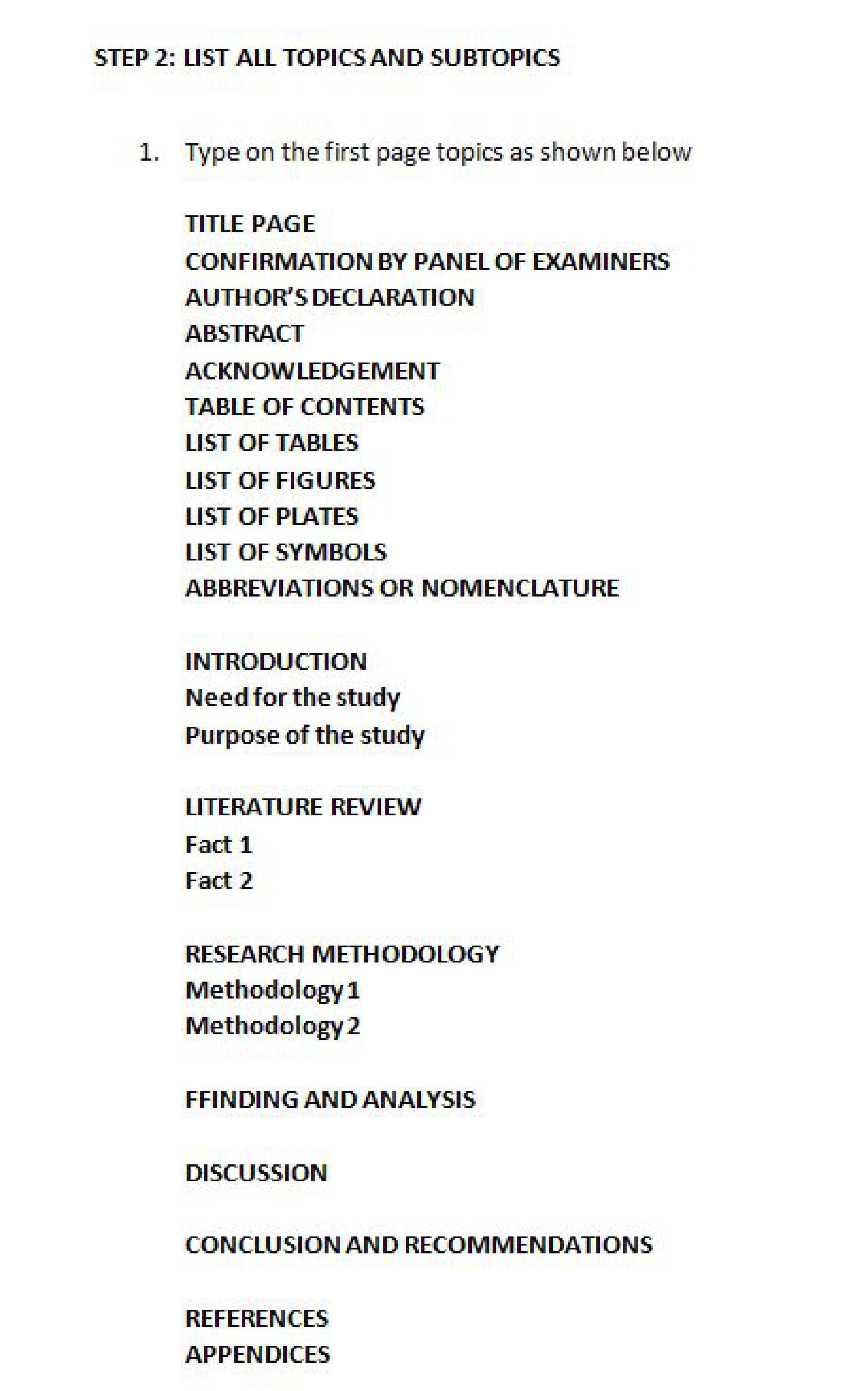
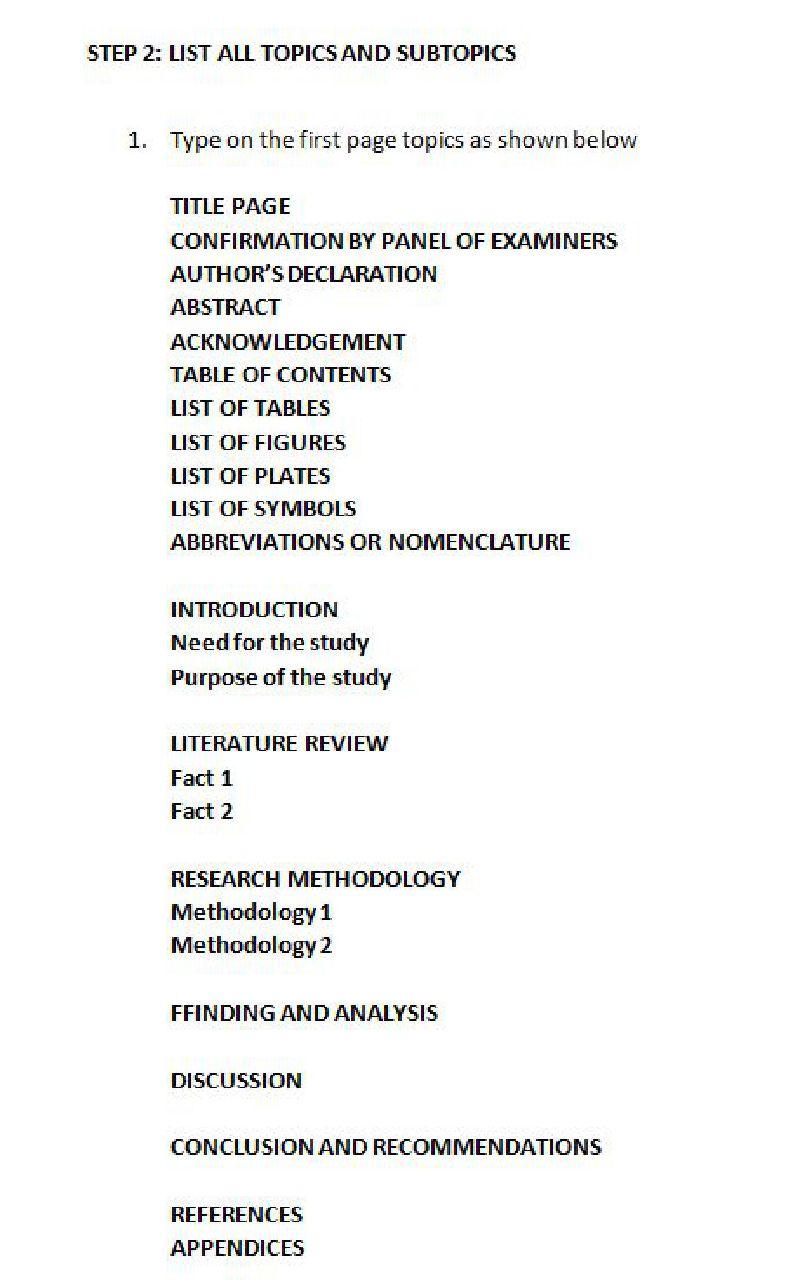
I- Preliminary Section
a. Title Page
b. Abstract
c. Acknowledgements
d. Declaration of Originality of Project
e. Table of Contents
f. List of Tables
g. List of Figures
h. List of Abbreviations
II. Main Section
a. Introduction
b. Literature Review
c. Research Methodology
d. Results and Discussion
e. Conclusion and Recommendations
III. Supplementary Materials
a. List of References
b. List of Appendices
2.3.1 PRELIMINARY SECTION
a. Title Page
Contains the following particulars:
i. Project title
ii. Name of student
iii. Name of programme
iv. Academic session
a. Abstract
A brief statement on the objectives and contents of the project paper. It must be written according to the project paper structure, with emphasis given to the problem statement, methodology / research method, result/ research findings and conclusion. An abstract must not exceed 300 words.
b. Acknowledgements
Naming and giving thanks to specific individual(s)/ institution(s) that have provided assistance and support in the research process. The acknowledgements must be moderate and appropriate for the kind of assistance received.
c. Declaration of Originality Of Project
The project paper should be based on the research conducted by the
student him/herself. All quotations and references should aknowledge sources accordingly. Plagiarism is a serious offence and can be penalized by the polytechnic.
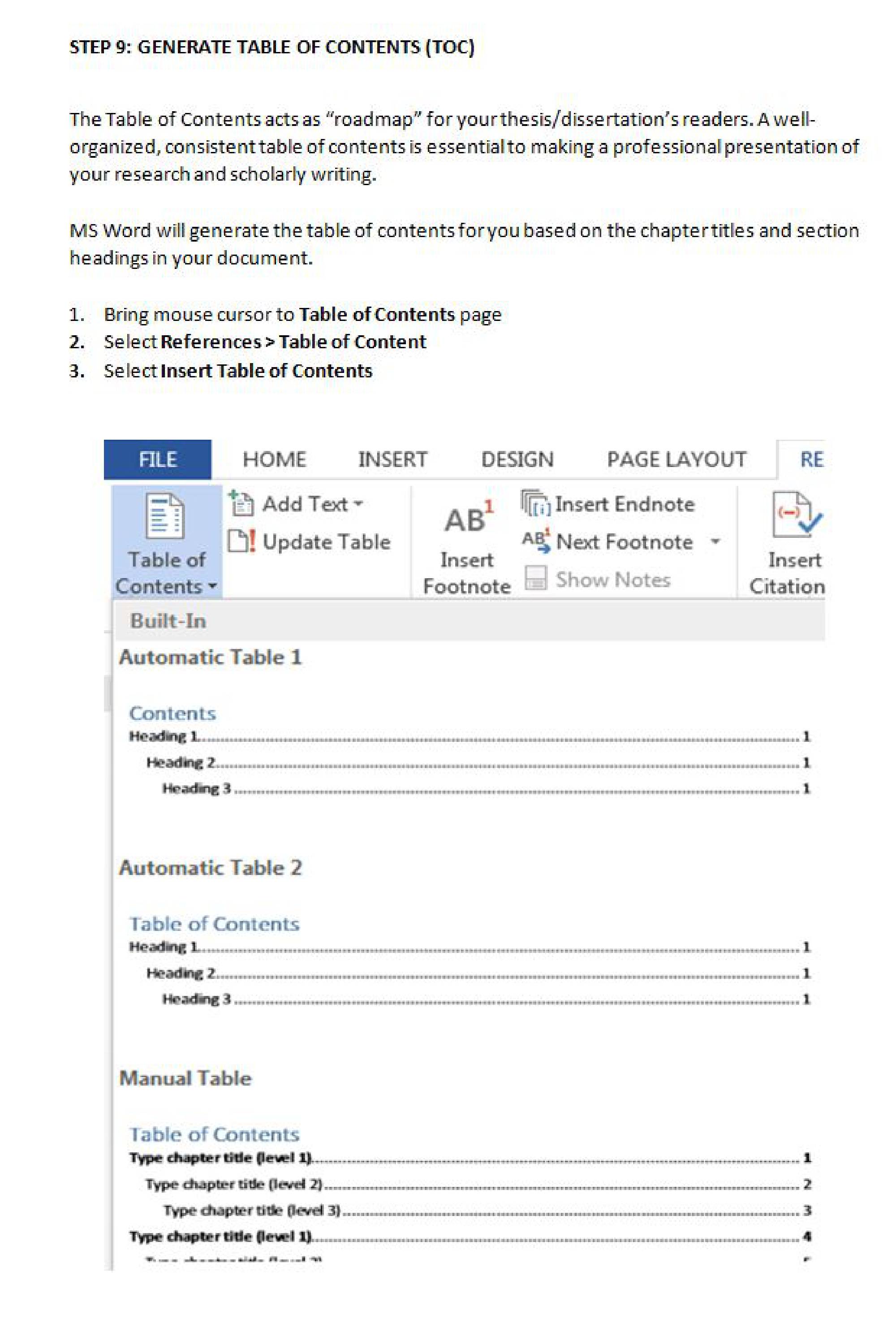
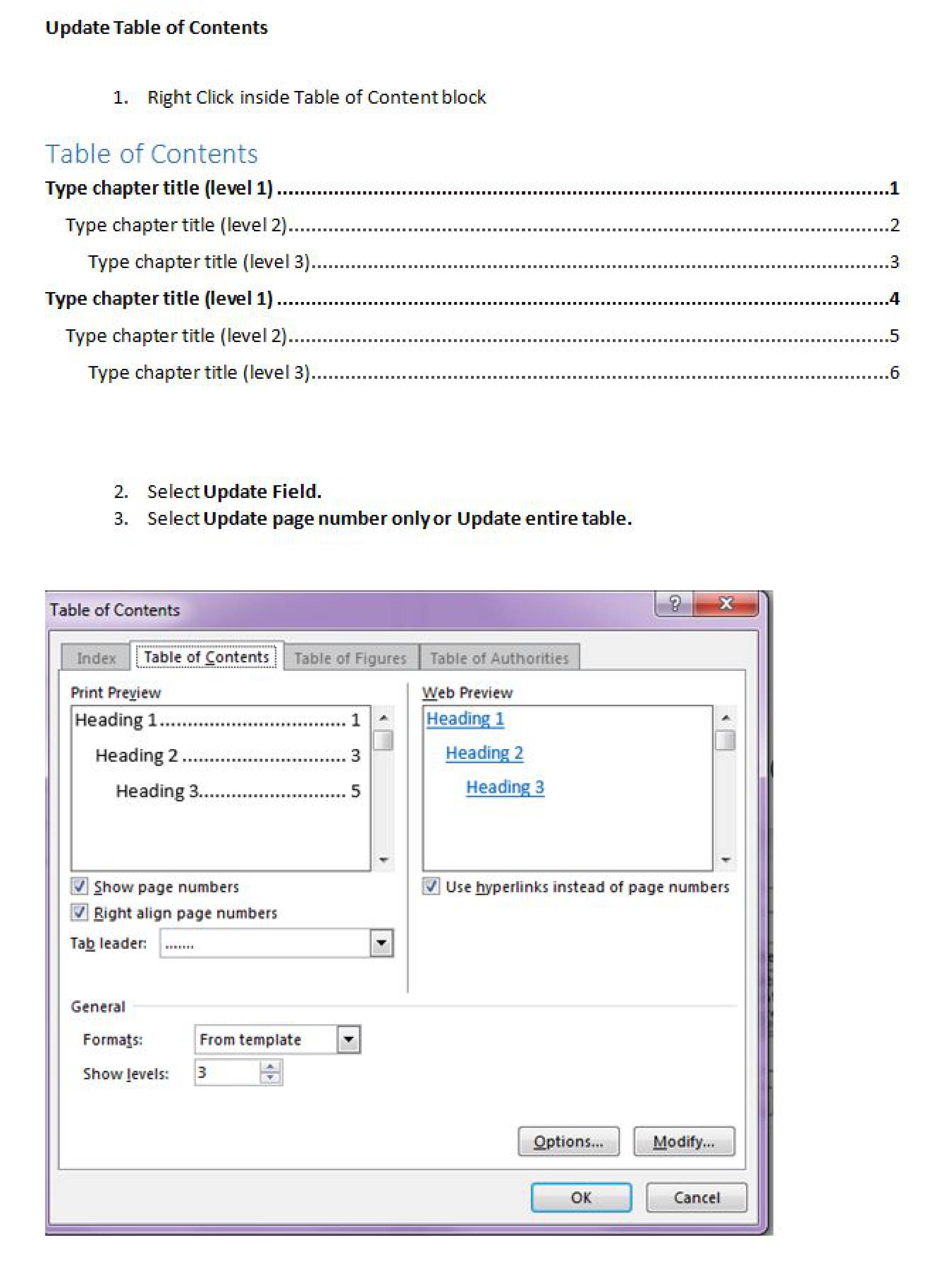
d. Table of Contents
Lists the main parts of the project paper, beginning with the particulars of the preliminary pages except the title page. This is followed by particulars of the main section of the project paper and subsequently, the supplementary pages. Page referencing should be given for each.
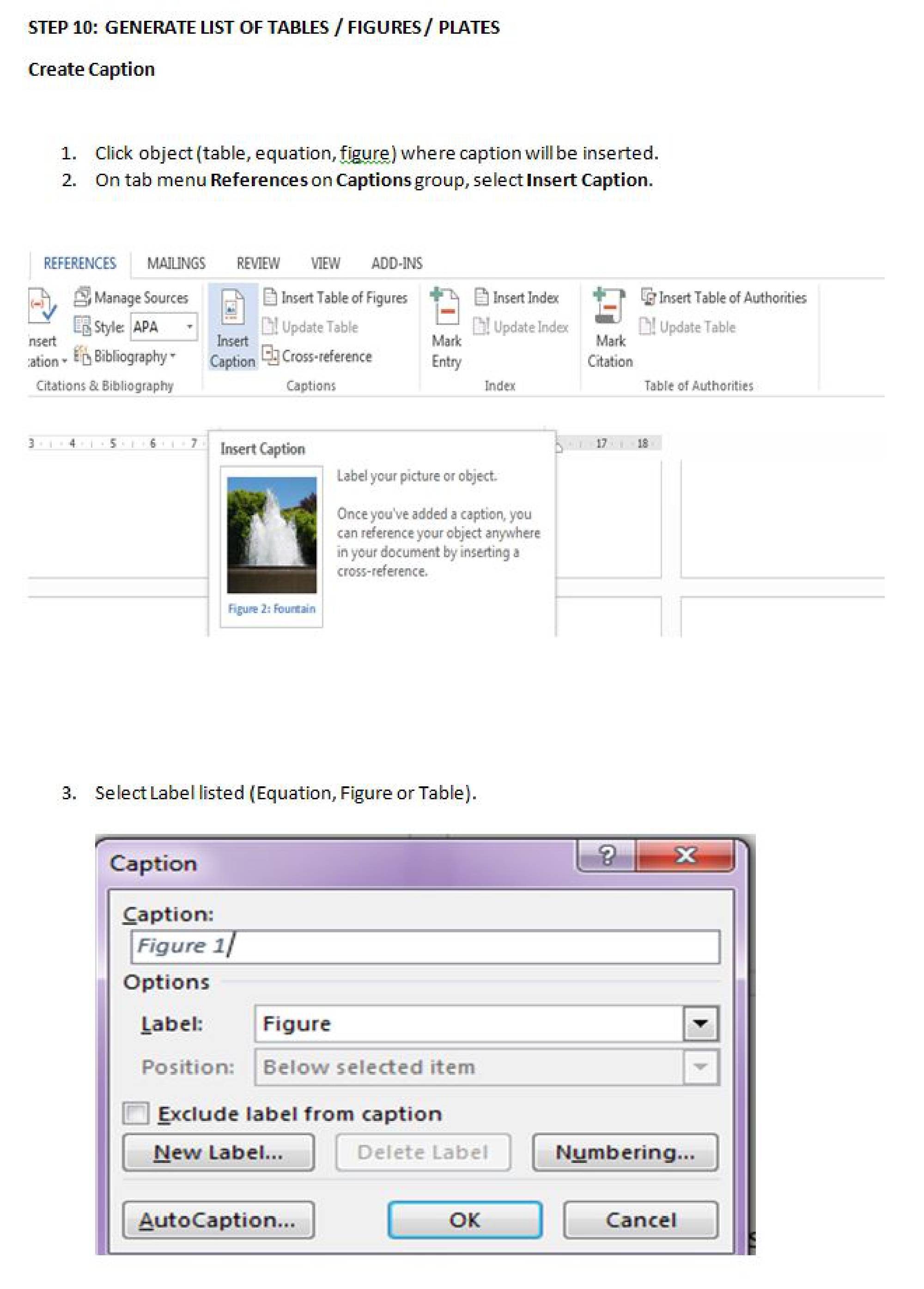
e. List of Tables, Figures and Abbreviations
Lists the tables, figures and abbreviations dispayed in the text. The list should be written in full as in the text of the project paper. The reference number for both tables and figures must be written in Arabic numerals. Page referencing should also be included.
2.3.2 MAIN SECTION
a. Chapter 1: Introduction
Chapter 1 introduces the problems/ issues to be researched and indicates its importance and validity. It sets forth the context, the hypotheses to be tested, the research questions, the research objectives and the research significance.
b. Chapter 2: Literature Review
Chapter 2 contains reviews of literature related to the topic of the Project Paper. It is meant to act as a base for the rest of the Project Paper.
Literature selected must be up-to-date, analyzed and synthesized logically.
It is not a mere summary of works of different authors. The analysis of
literature usually forms the basis for the development of the framework for research. Subsequently, a theoretical or conceptual framework should be included.
c. Chapter 3: Research Methodology
Chapter 3 describes the methods and techniques used, such as the population and sample size, variables and measurement, types and methods of data collection, and techniques of data analysis. It must also provide justifications for the methods used.
d. Chapter 4: Results and Discussion
Chapter 4 discusses two things: the analysis results obtained and interpretation of those results. The analysis results covers descriptive analysis and inferential analysis. Descriptive analysis describes the sample characteristics such as age, gender, education and others. Inferential analysis covers hypothesis testing analysis. The interpretation of results in the text must precede the showing of tables or diagrams.
e. Chapter 5: Conclusion and Recommendations
Chapter 5 highlights the findings of the study upon which a conclusion is drawn in line with the objectives set. It is suitable as well to discuss the alternative methods that could be taken to solve the identified research problems or research questions.
2.3.2 MAIN SECTION
a. Chapter 1: Introduction
Chapter 1 introduces the problems/ issues to be researched and indicates its importance and validity. It sets forth the context, the hypotheses to be tested, the research questions, the research objectives and the research significance.
b. Chapter 2: Literature Review
Chapter 2 contains reviews of literature related to the topic of the Project Paper. It is meant to act as a base for the rest of the Project Paper.Literature selected must be up-to-date, analyzed and synthesized logically. It is not a mere summary of works of different authors. The analysis of literature usually forms the basis for the development of the framework for research. Subsequently, a theoretical or conceptual framework should be included.
c. Chapter 3: Research Methodology
Chapter 3 describes the methods and techniques used, such as the population and sample size, variables and measurement, types and methods of data collection, and techniques of data analysis. It must also provide justifications for the methods used.
d. Chapter 4: Results and Discussion
Chapter 4 discusses two things: the analysis results obtained and interpretation of those results. The analysis results covers descriptive analysis and inferential analysis. Descriptive analysis describes the sample characteristics such as age, gender, education and others. Inferential analysis covers hypothesis testing analysis. The interpretation of results in the text must precede the showing of tables or diagrams.
e. Chapter 5: Conclusion and Recommendations
Chapter 5 highlights the findings of the study upon which a conclusion is drawn in line with the objectives set. It is suitable as well to discuss the alternative methods that could be taken to solve the identified research problems or research questions.
2.3.3 SUPPLEMENTARY MATERIALS
What is referencing?
Referencing is a standardised way of acknowledging the sources of information and ideas that you have used in your assignments and which allows the sources to be identified.
Why reference?
Referencing is important to avoid plagiarism, to verify quotations and to enable readers to follow up what you have written and more fully understand the cited author’s work.
Steps in referencing
• Record the full bibliographic details and relevent page numbers of
source from which information is taken
• Insert the citation at the appropriate place in the text of your
document
• Include a reference list that includes all in-text citations at the end
of your document
In-text citations
• In an author-date style, in-text citations usually require the name
author(s) and the year of publication
• A page number is included if you have a direct quote, paraphrase
a passage or you want to direct the reader to a specific page or
idea. Page number may also be included if the you are referring
to a long work and the page numbers might be useful to the
reader
How to create a reference list/bibliography
• A reference list includes just the books, articles and web pages
etc that are cited in the text of the document. A bibliography
includes all sources consulted for background or further reading.
• A reference list is arranged alphabetically by author. If an item
has no author, it is cited by title, and included in the alphabetical
list using the first significant word of the title
• If you have more than one item with the same author, list the
items chronologically, starting with the earliest publication
• Each reference appears on a new line
• Each item in the reference list is required to have a hanging
indent
• References should not be numbered
Referencing Software
The Polytechnic of Sultan Salahuddin Abdul Aziz Shah Library will provide access to EndNote and RefWorks which assist in creating reference lists. The APA 5th style is included with the Endnote program. You can also download an additional APA style from the UQ Library that includes the “APA Style Guide to Electronic References” at:
http://www.library .psa.edu.my/fags/endnote/styles.html
References from books:
Author (s) of books - family name and initials, use & for multiple
authors. (year Publication). Title of book_ italicised. Place of
publication: Publisher
Berkman,R.I.(1986). Find it fast: How to uncover expert information.
New York: Harper Perrenial
Johnson, L., Lewis, K., Peters, M., Harris, Y., Moreton, G., Morgan, B. Et
al. (2005) How far is? London: McMillan
American Psychological Association. (2001). Publication manual of the
Americann Psychological Association (5th ed.). Washington,
DC: Author
References from edited books:
Raz, N. (2000). Aging of the brain and its impact on cognitive
performance: Integration of structural and functional findings. In
F. I. M. Craik & T. A. Salthouse (Eds.), Handbook of aging and
cognition (2nd ed., pp. 1-90). Mahwah, NJ: Erlbaum.
References from journals articles:
Nik Mustapha, R. A. (1993). Valuing outdoor recreational Resources in
Tasik Perdana using dichotomous choice contingent valuation
method. The Malaysian Journal of Agricultural Economics, 10,
39-50.
Schafer, J.L & Kang, J. (2008). Average causal effects from
nonrandomized Studies : A practical guide and simulated
example. Psychological Methods, 13, 279-313
American Educational Research Association. (2006). Standards for
reporting on empirical social science research in AERA
publications.Educational Researcher, 35(6), 33-40.
References from conference proceedings:
Bohrer, S., Zielke, T., & Freiburg, V. (1995) Integrated obstacle detection
Framework for intelligent cruise control on motorways. Paper
presented at IEEE Inteligent Vehicles Symposium. Detroit, MI:
Piscataway
References from government documents:
Ministry of Human Resources. (2008). Labour and human resources
statistics. Putrajaya, WP: Malaysia.
References from manuscripts:
Moher, D., Liberati, A., Tetzlaff, J., Altman, D. G. & the PRISMA Group.
(2008). Preferred reporting items for systematic reviews and
meta-analysis: The PRISMA statement. Manuscript submitted
for publication.
References from doctoral dissertations (published & unpublished):
Darling, C. W. (1976). Giver of due regard: the poetry of Richard Wilbur.
Dissertation Abstracts International, 44, 4465. (AAD44-8794).
Zahira, M.I. (2008), Unconscionability in the law and practice of
franchising. Unpublished doctoral dissertation, Universiti Putra
Malaysia, Serdang, Selangor.
References from seminar papers:
Leclerc, C. M. & Hess, T. M. (2005, August). Age differences in
processing of affectively primed information. Poster session
presented at the 113th Annual Convention of the American
Psychological Association, Washington, DC.
References from the Internet:
Merriam-Webster’s online dictionary. (n.d.). Retrieved April 20, 2007, from http://www.m-w.com/dictionary/
The writings referred to within the text must state the name of the authors (excluding the initials) and the year of publication. If there are more than two authors to a particular work, use et. al. as an option after the first name, e.g. (Abdullah et. al.,2009). However, the name of all authors must be stated in the List of References.
When there are more than one reference to a particular matter, the arrangement of the authors must follow alphabetically, e.g. (Abdullah et. al, 2009; Barton, 2005; and Cheng, 2006). When there are more than one reference from the same author and the same year of publication, the alphabet a,b and subsequently, must be added at the end of the reference, with the earlier works in front, e.g. (Abdullah et. al, 2009a); (Abdullah et. al, 2009b); or (Abdullah et. al, 2009a,b).
b. List of Appendices
This contains data, additional calculations, analysis output and
questionnaire forms (if any) as additional information or reference to the text.
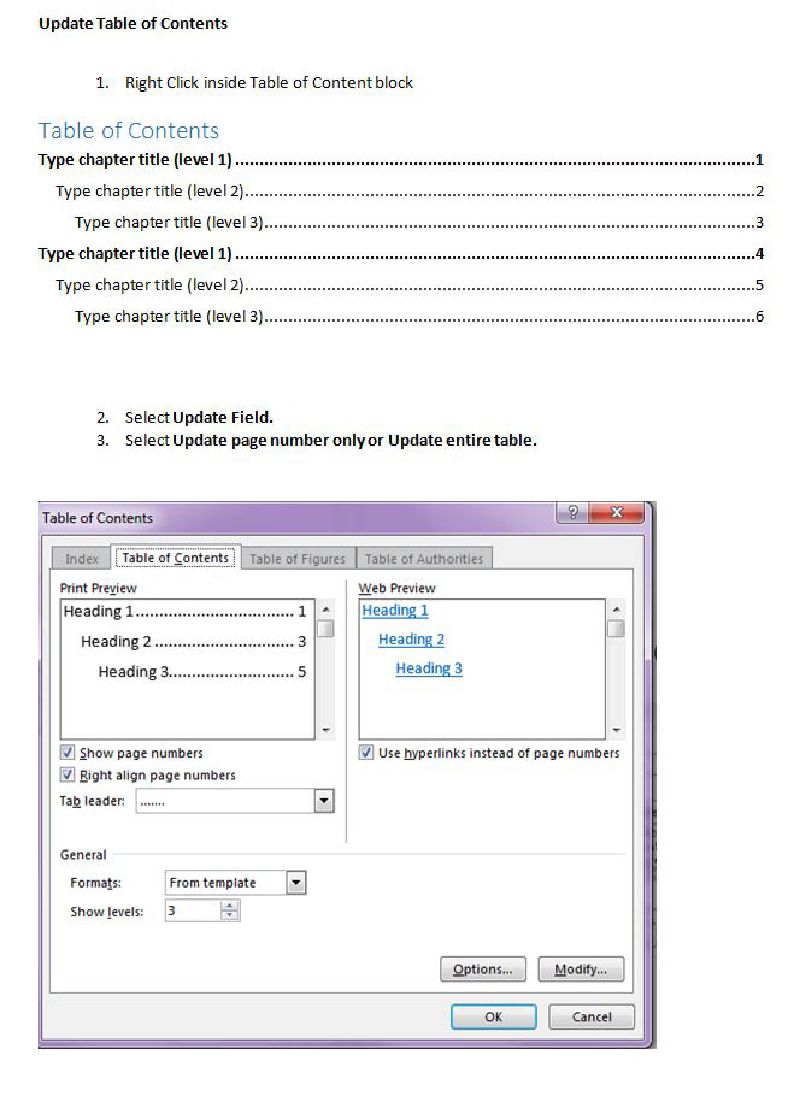
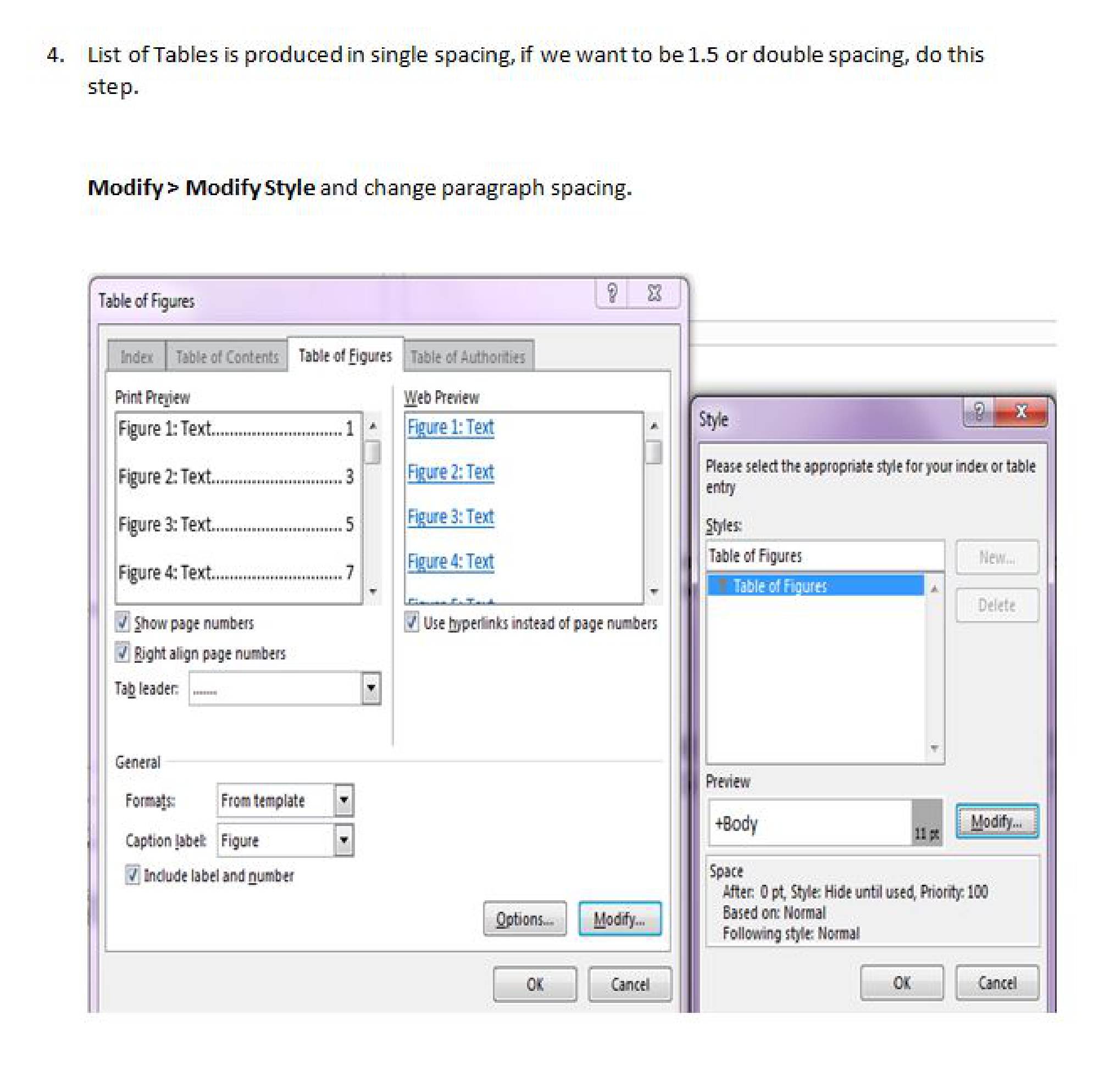
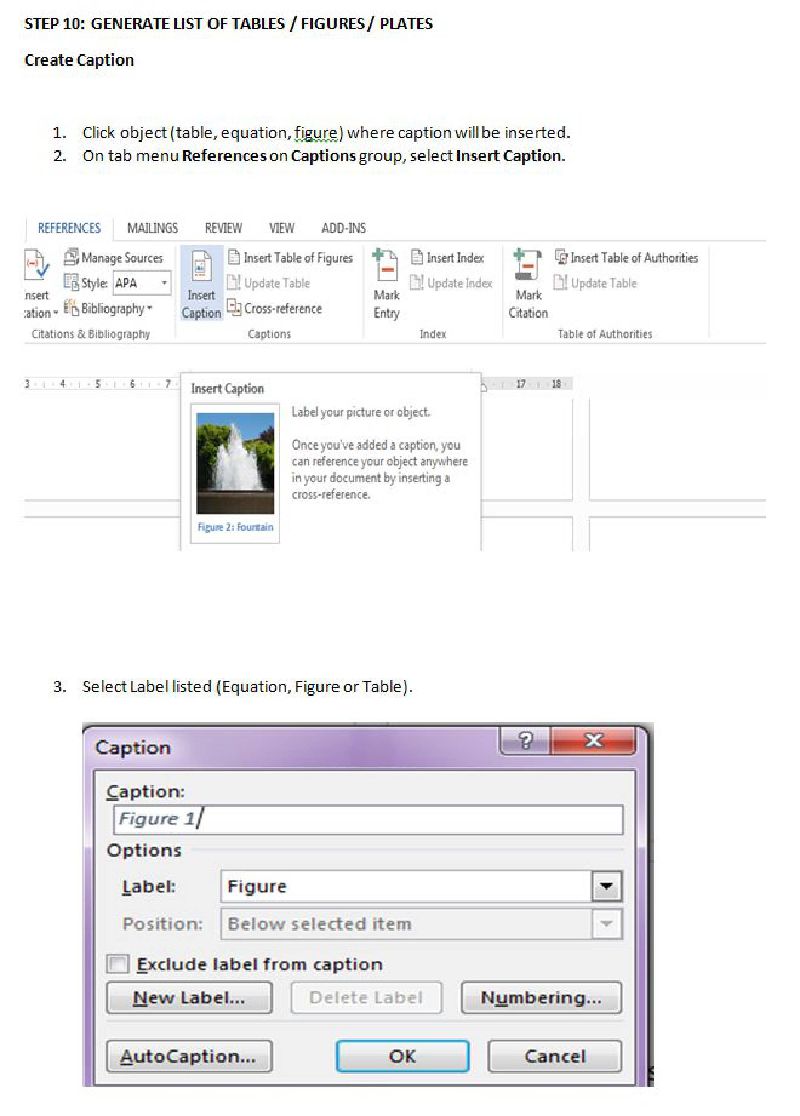 GENERATE LIST TABLE
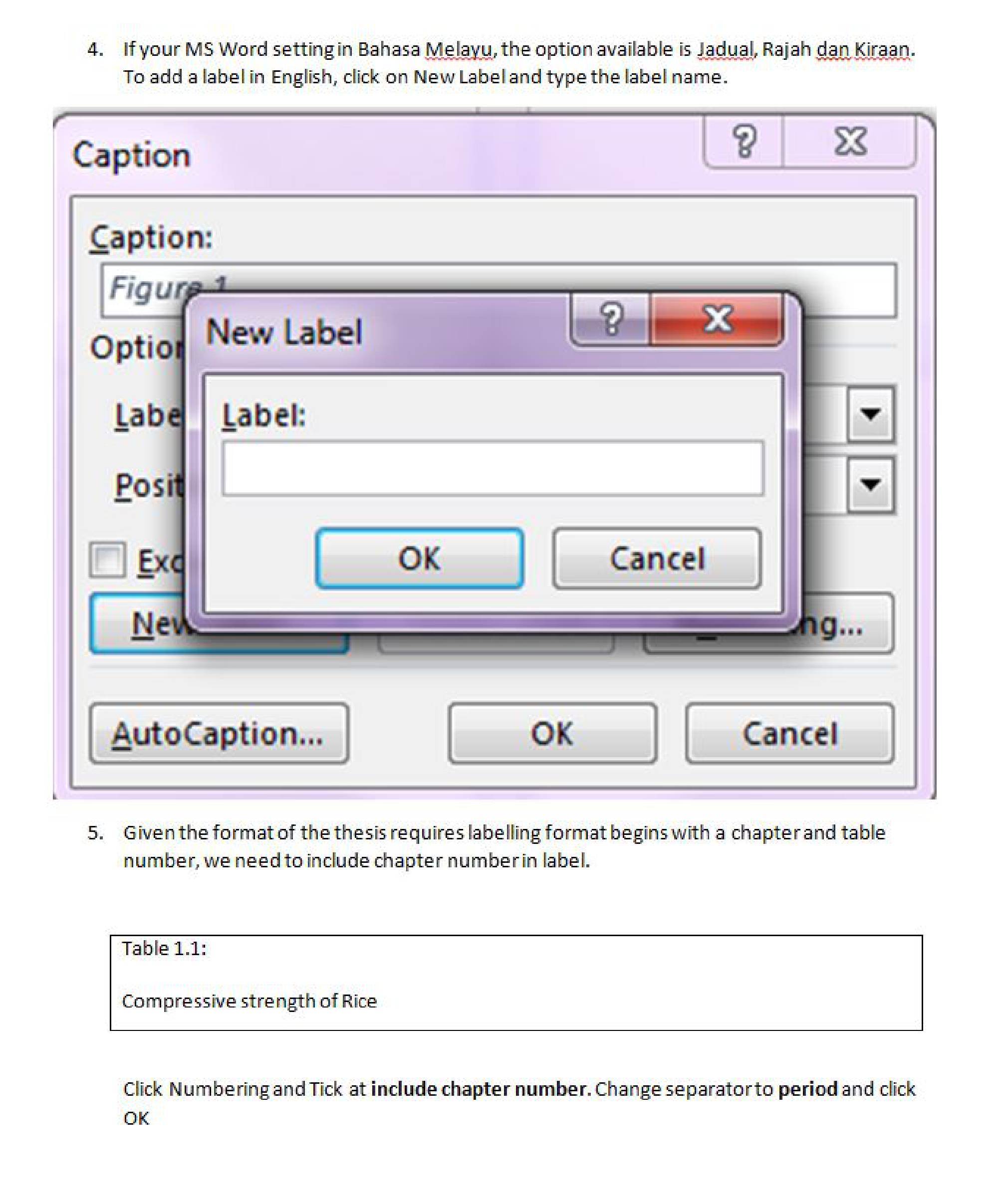
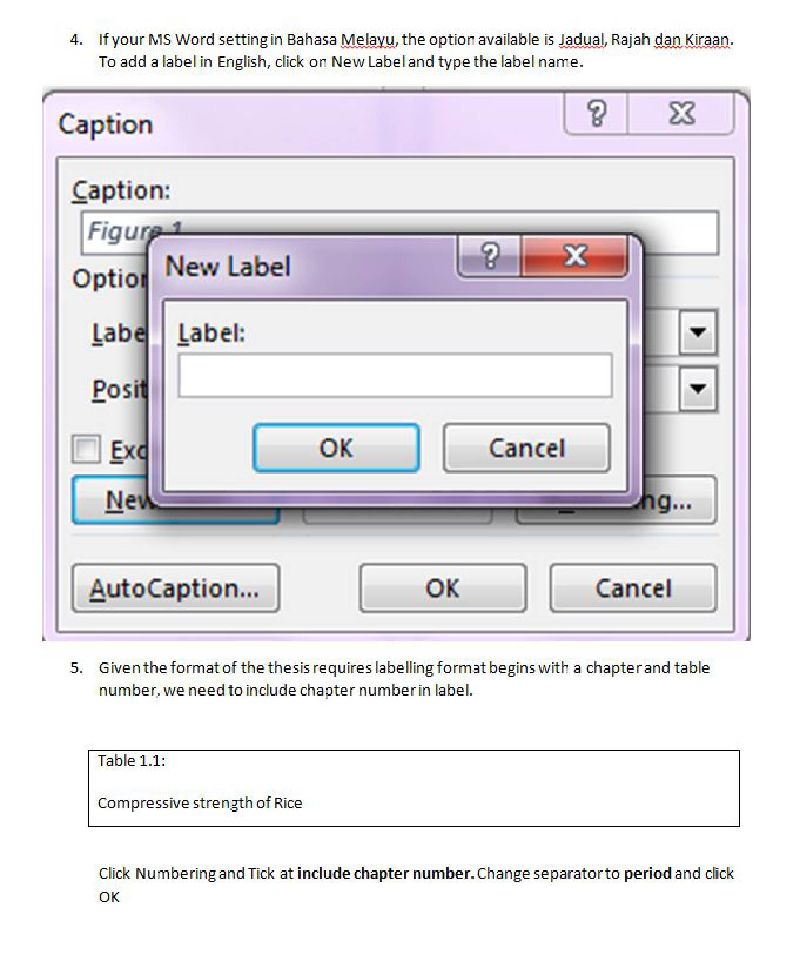 LABELLING NEW CAPTION
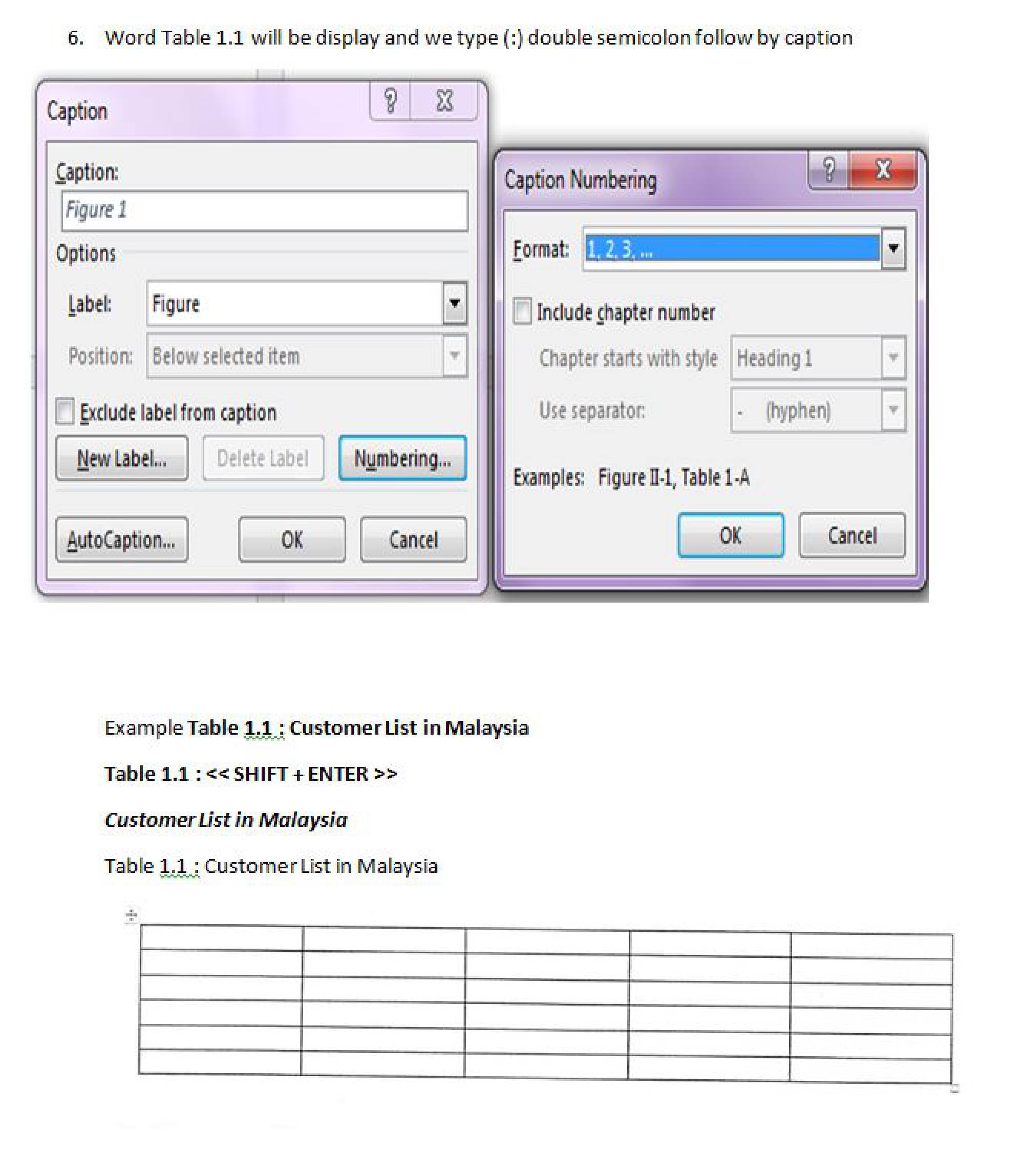
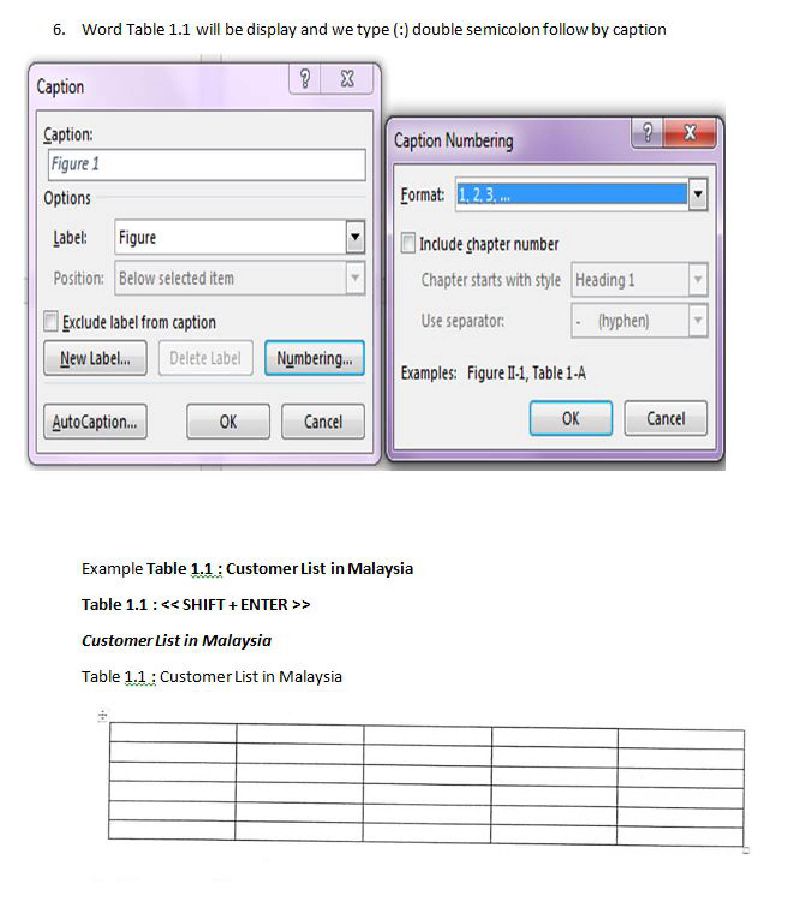 LABELLING CAPTION NUMBER
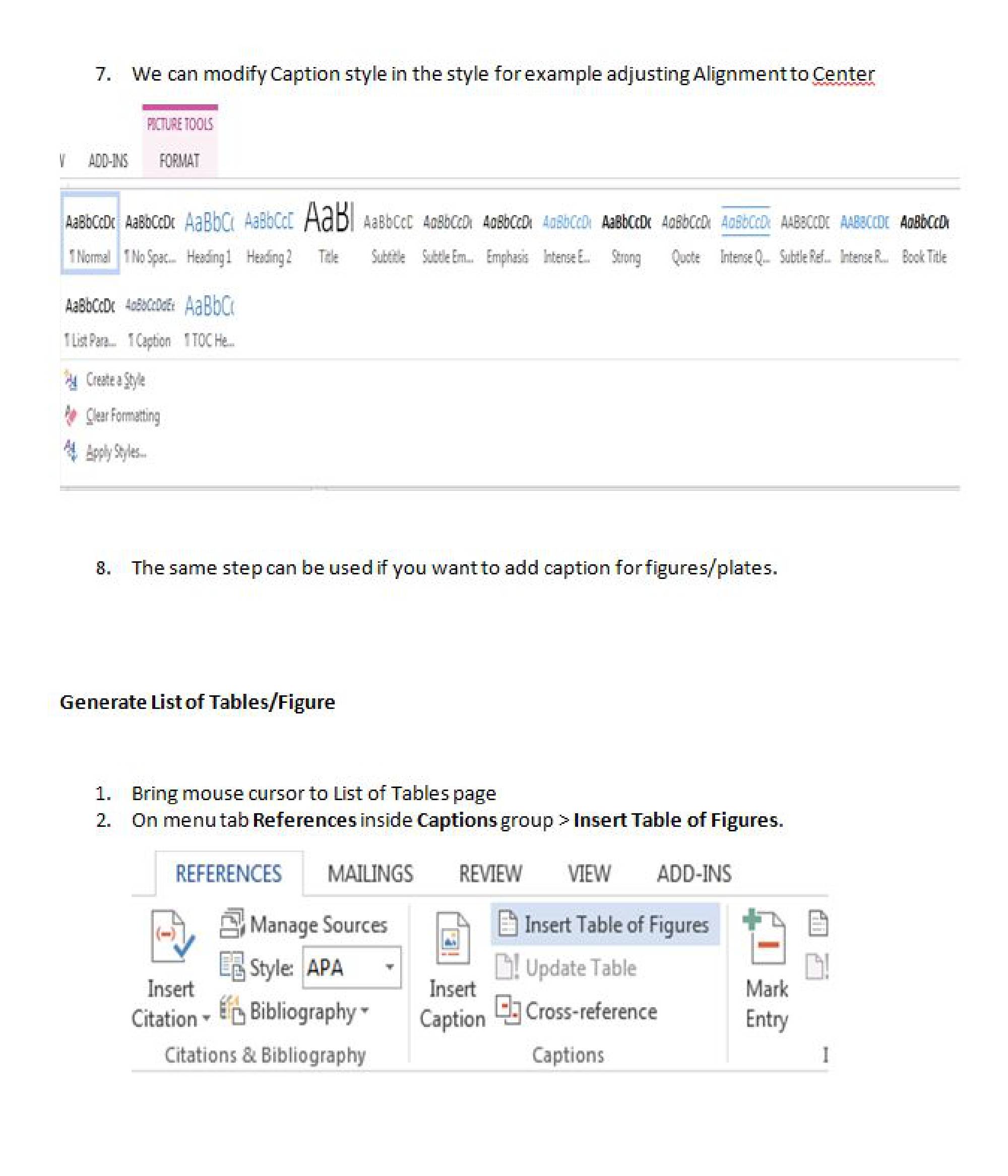
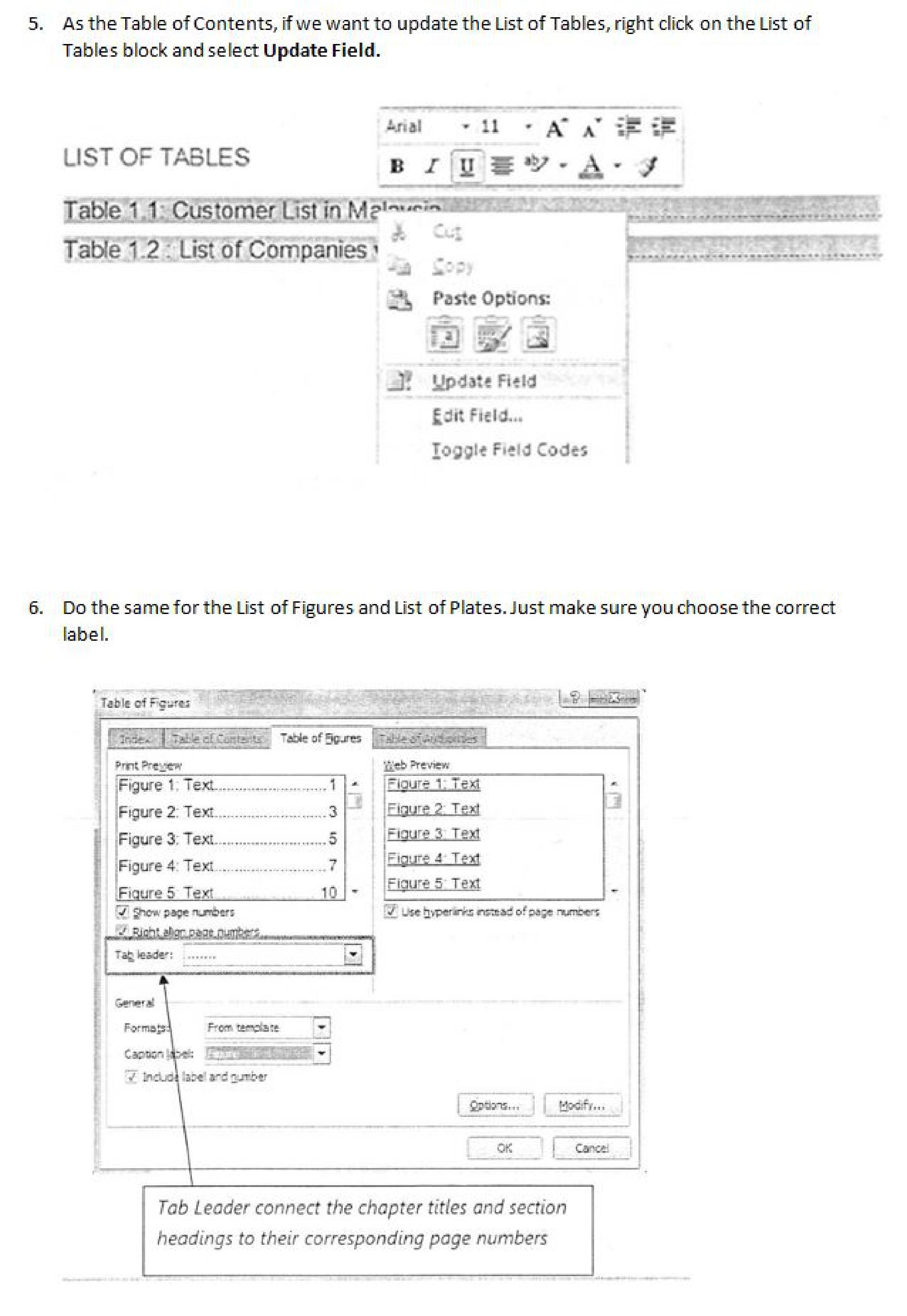
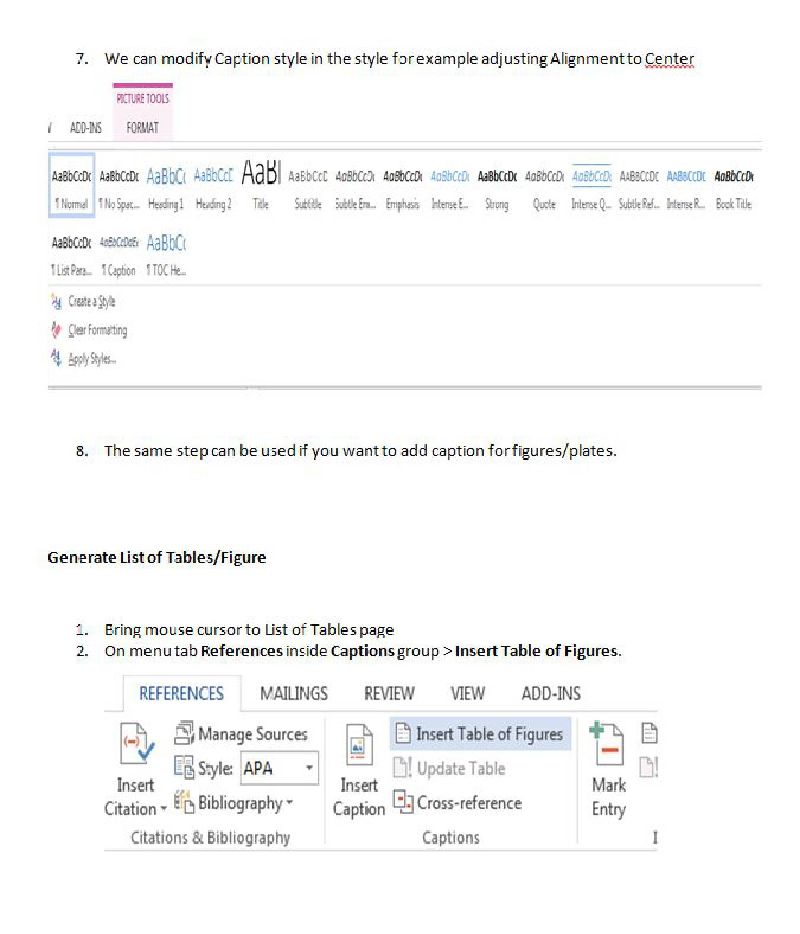 LABELLING LIST TABLES/FIGURE
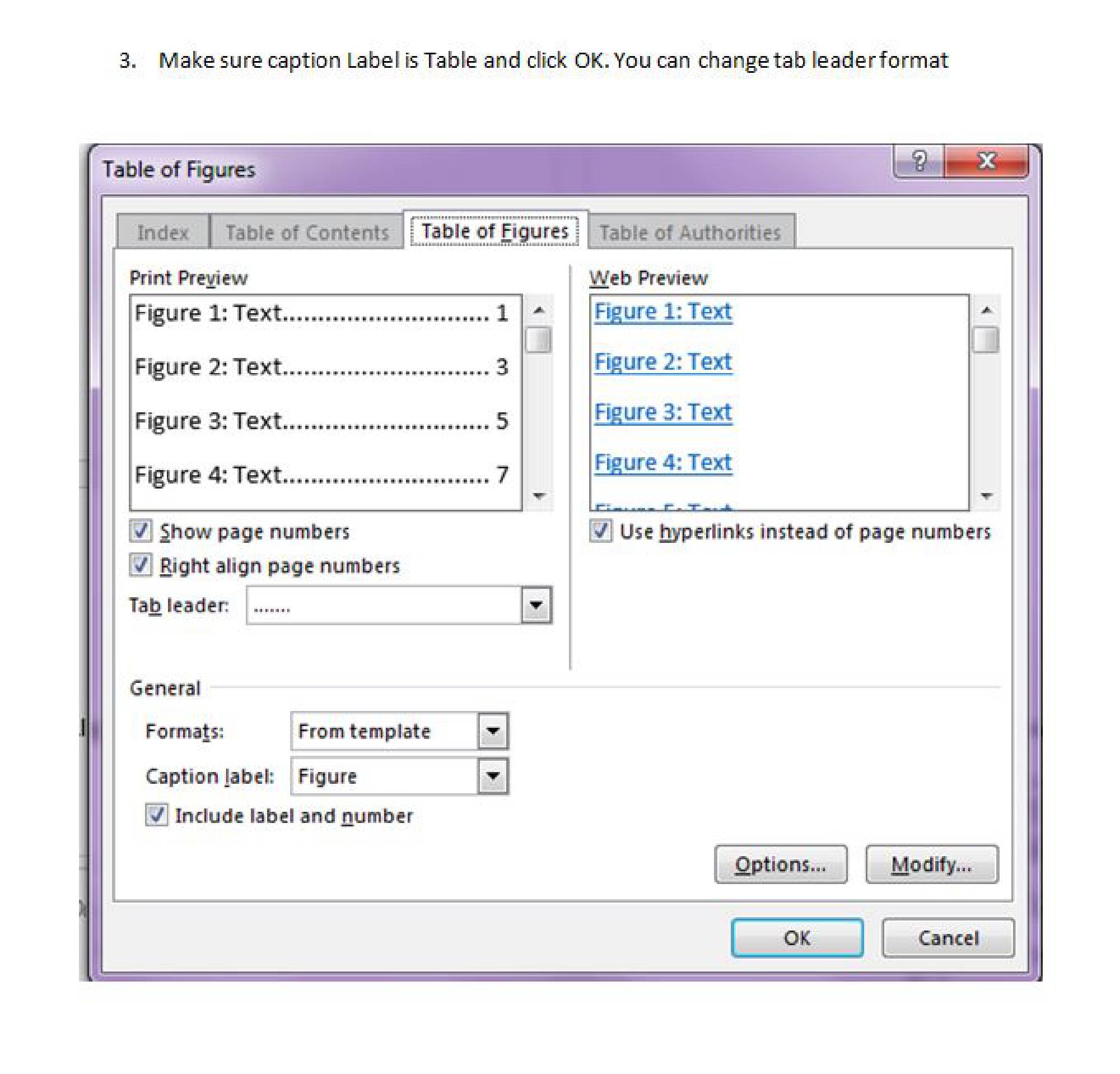
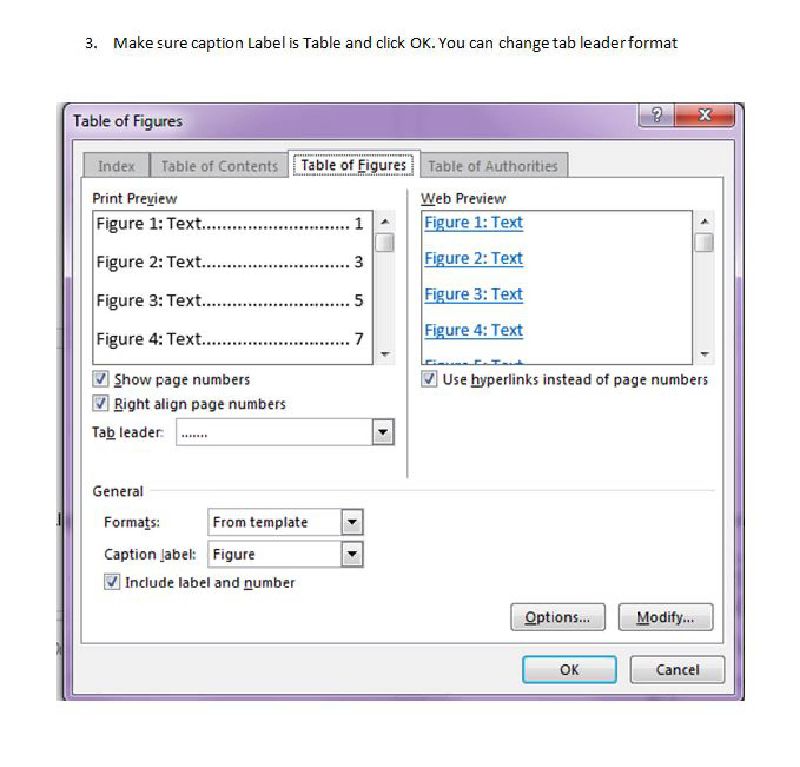 LABELLING TABLE OF FIGURES
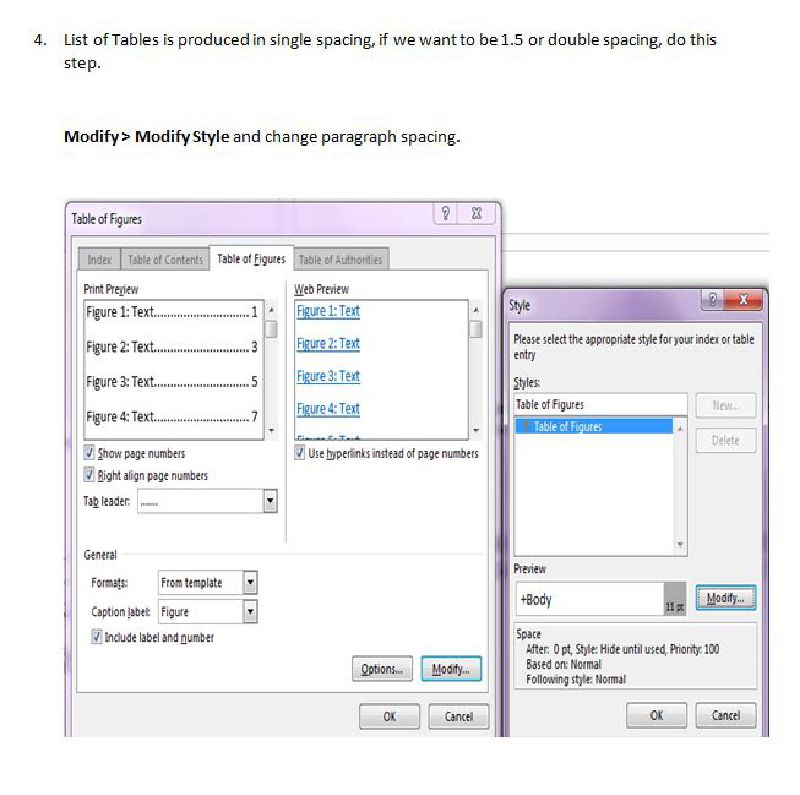 MODIFY STYLES
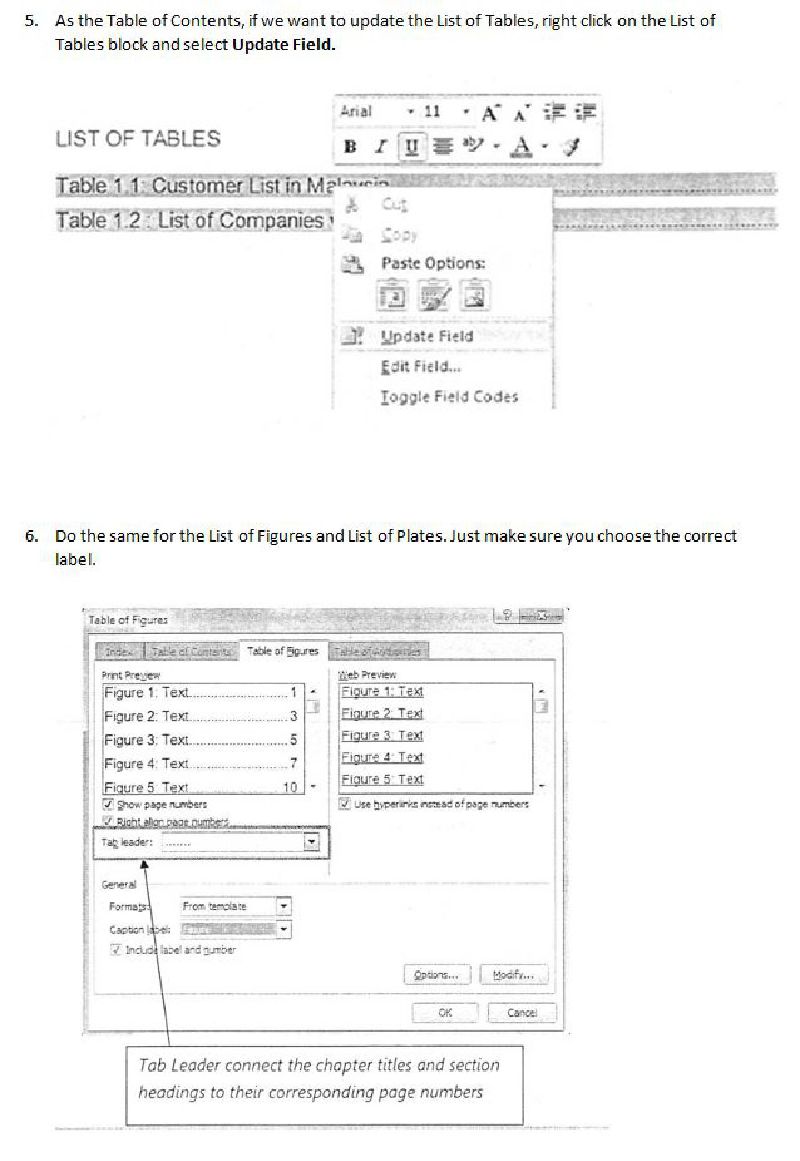 STEP TO UPDATE CAPTION LABEL
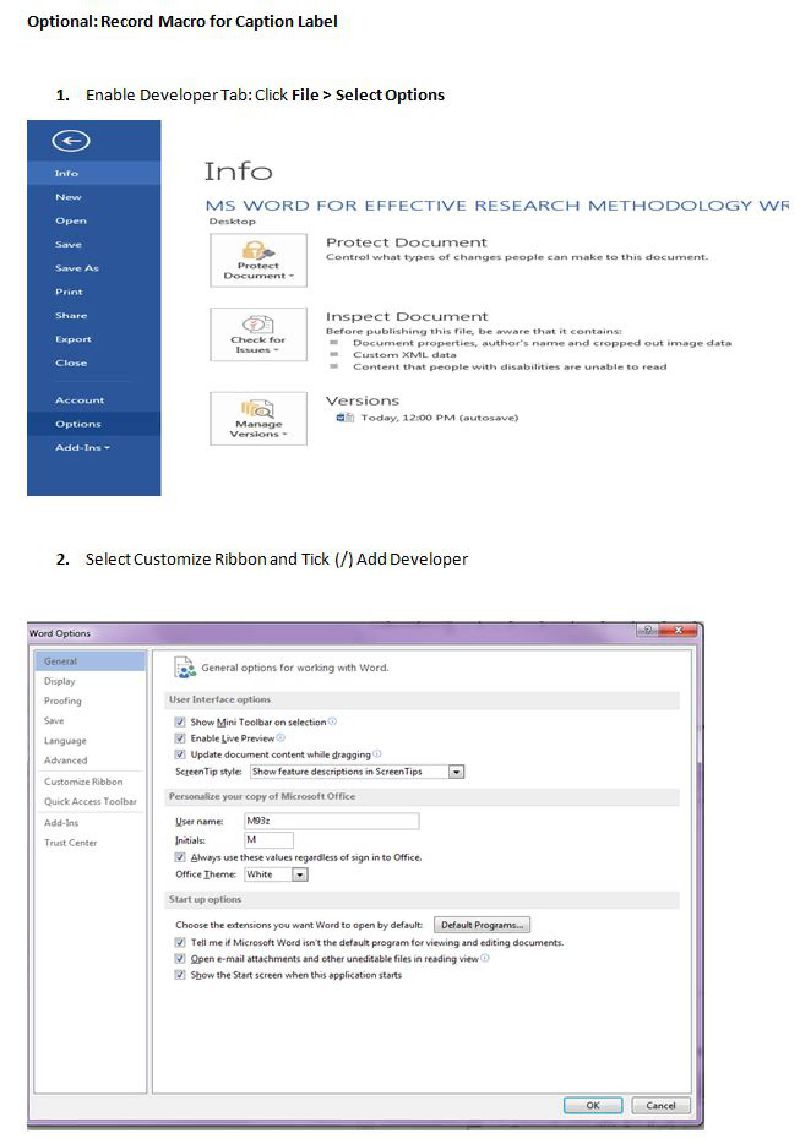 CAPTION LABEL
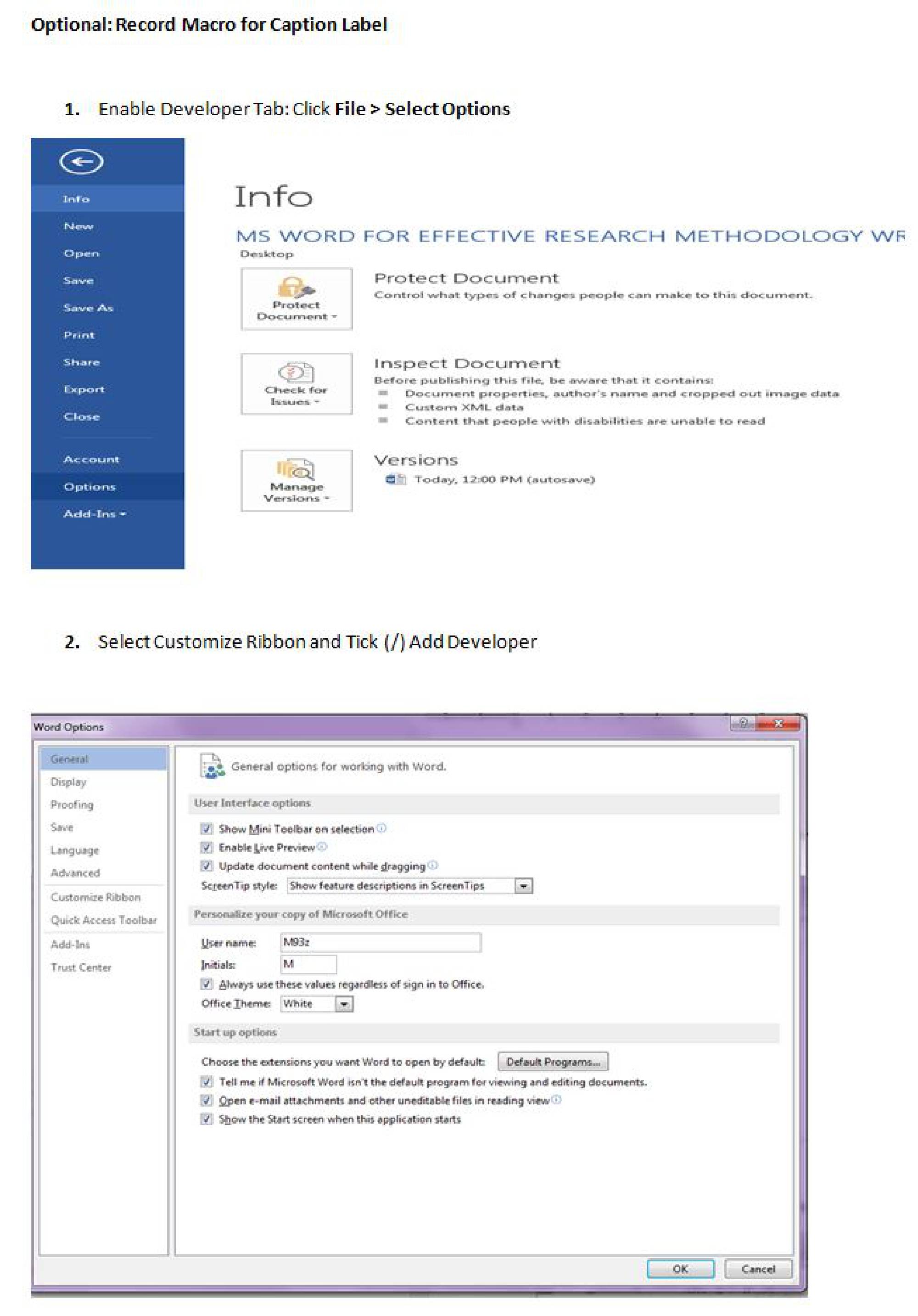
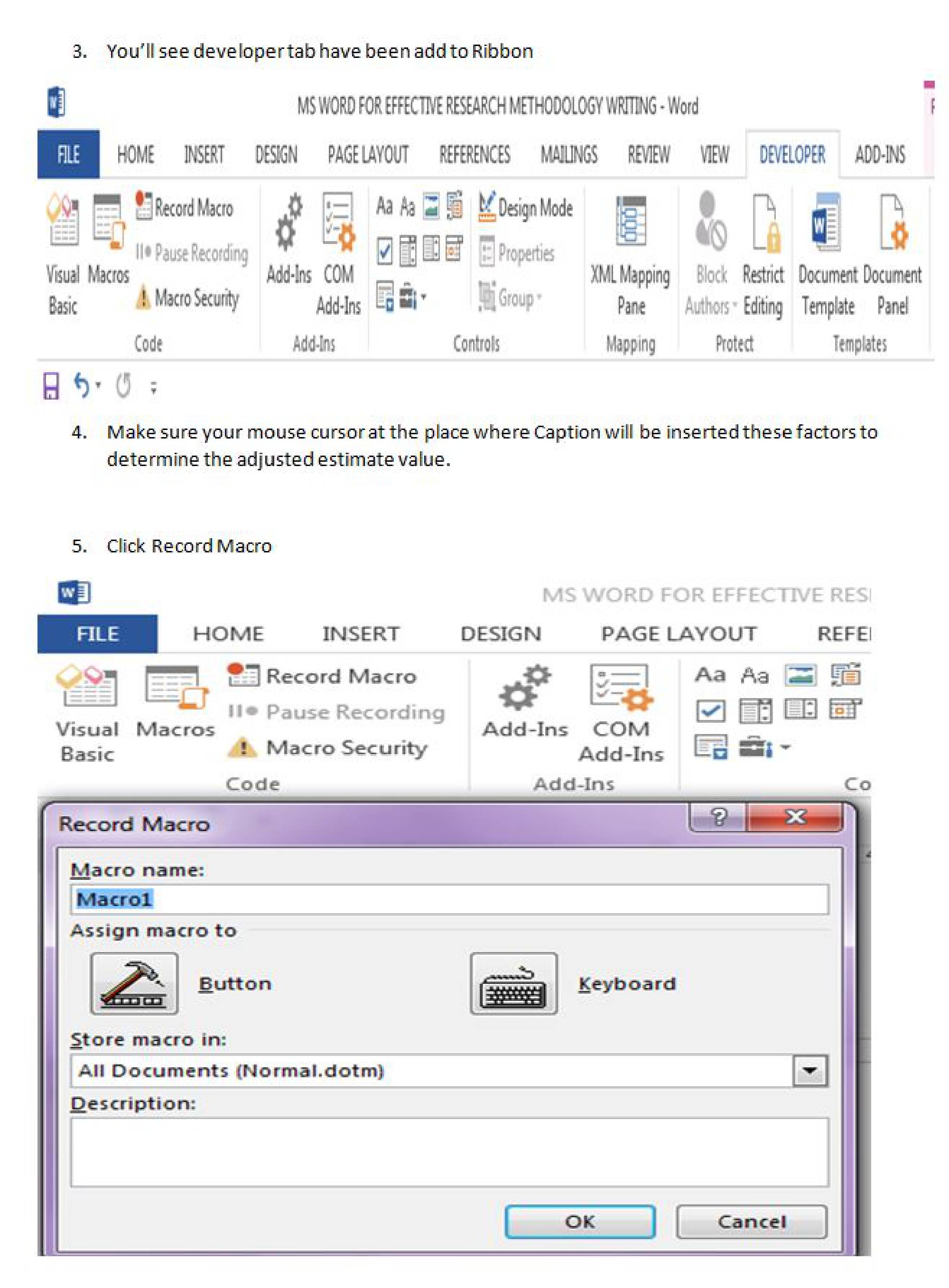
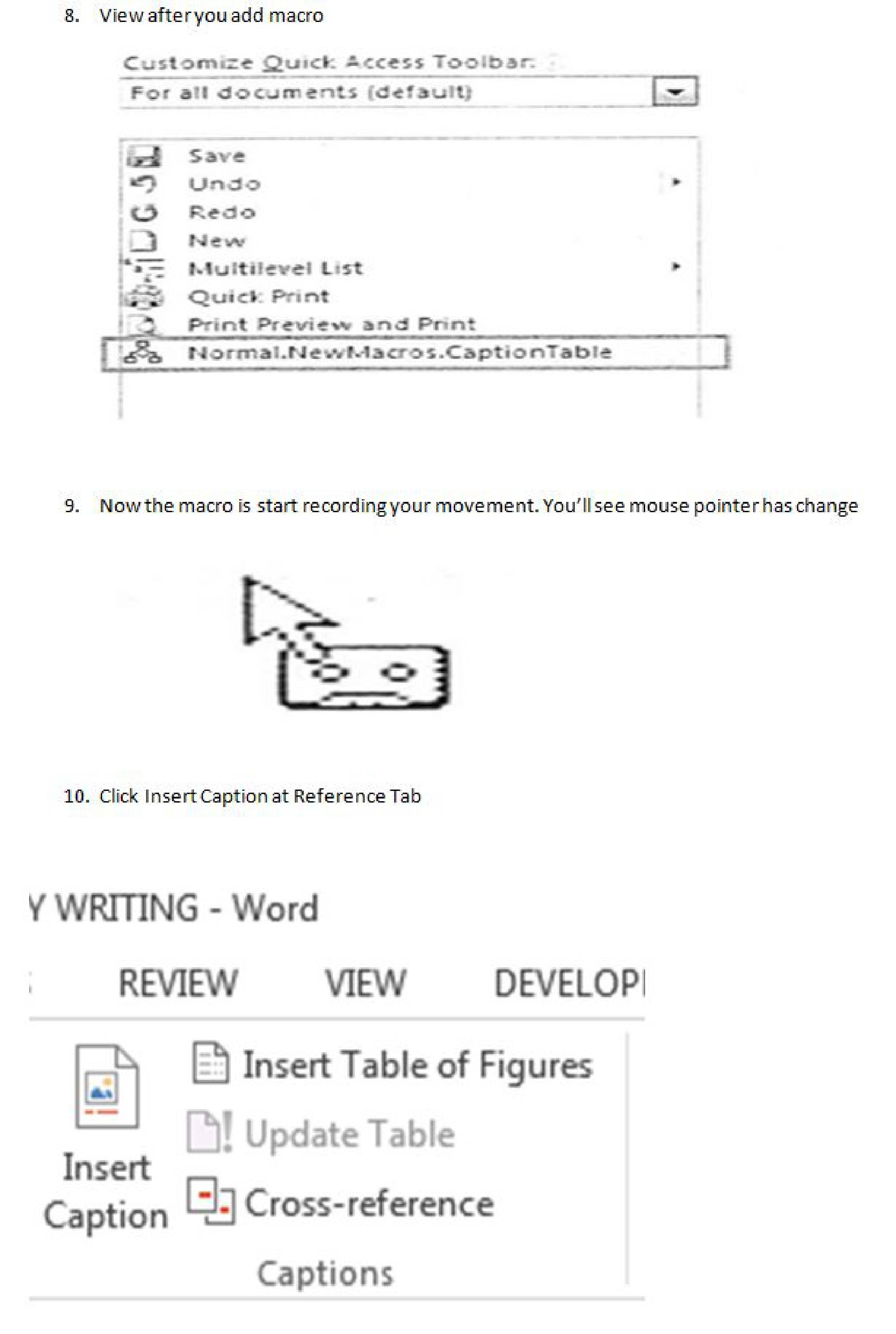
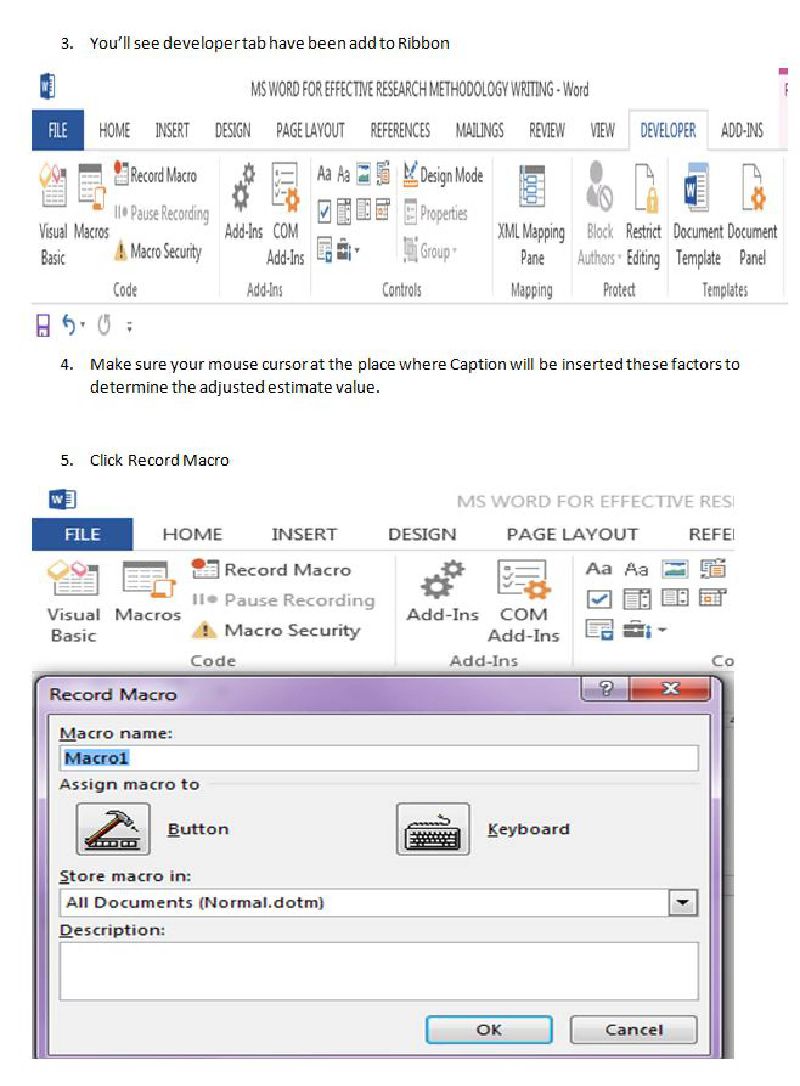 VIEW RECORD MACRO
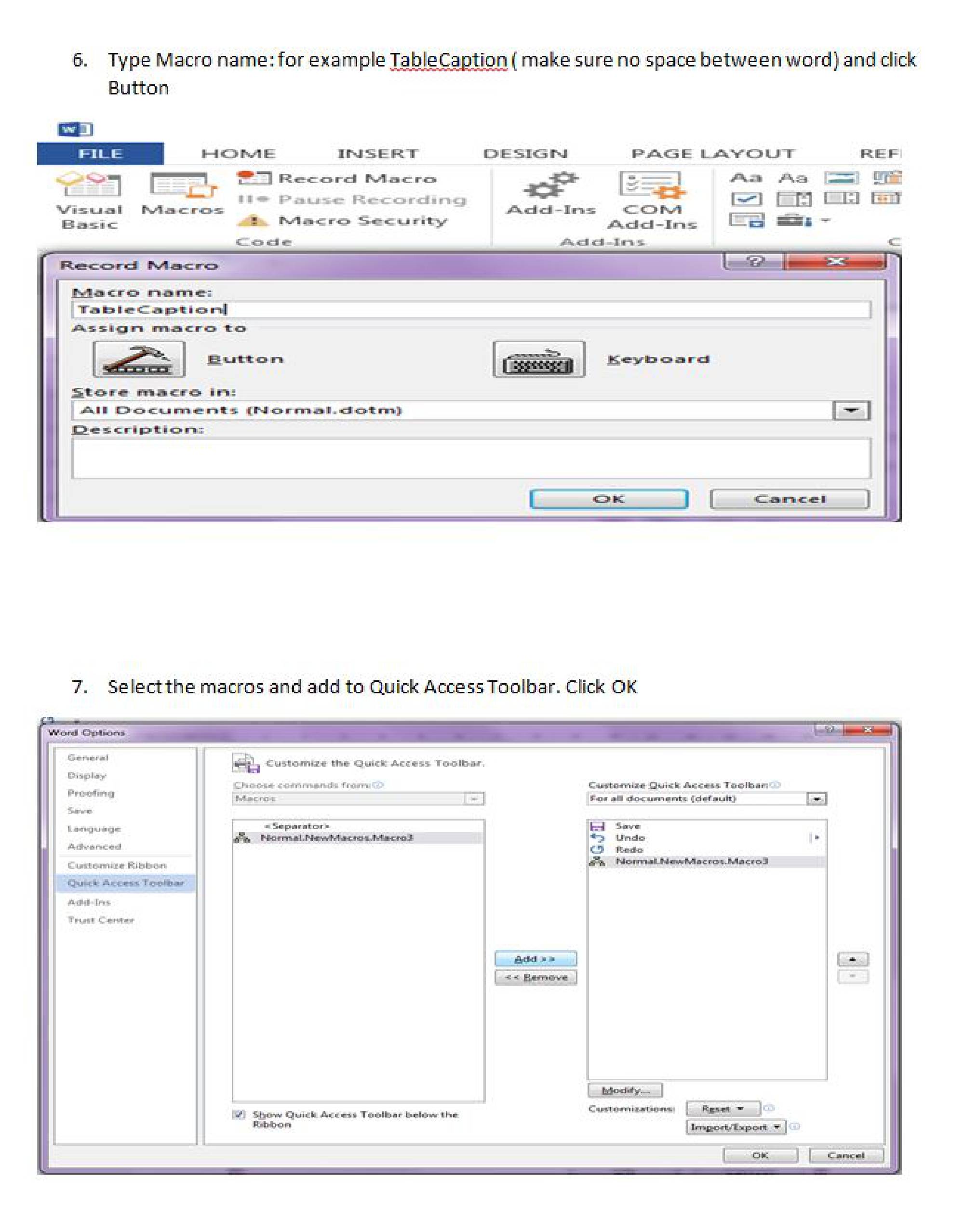
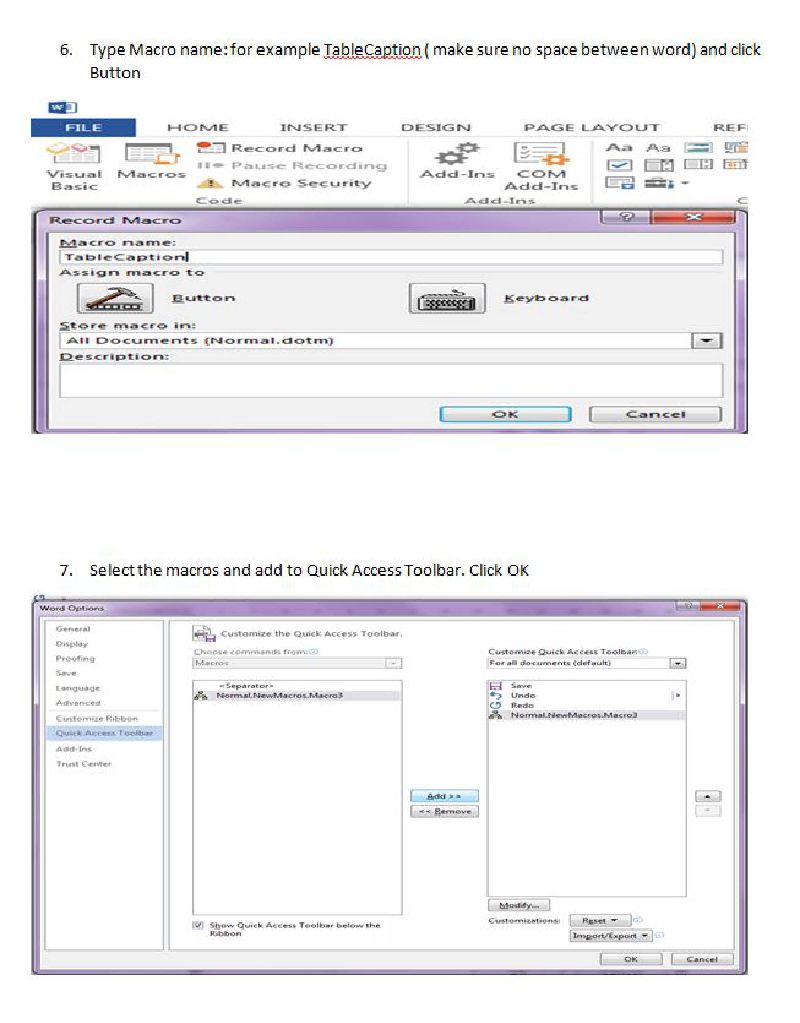 TYPE MACRO NAME
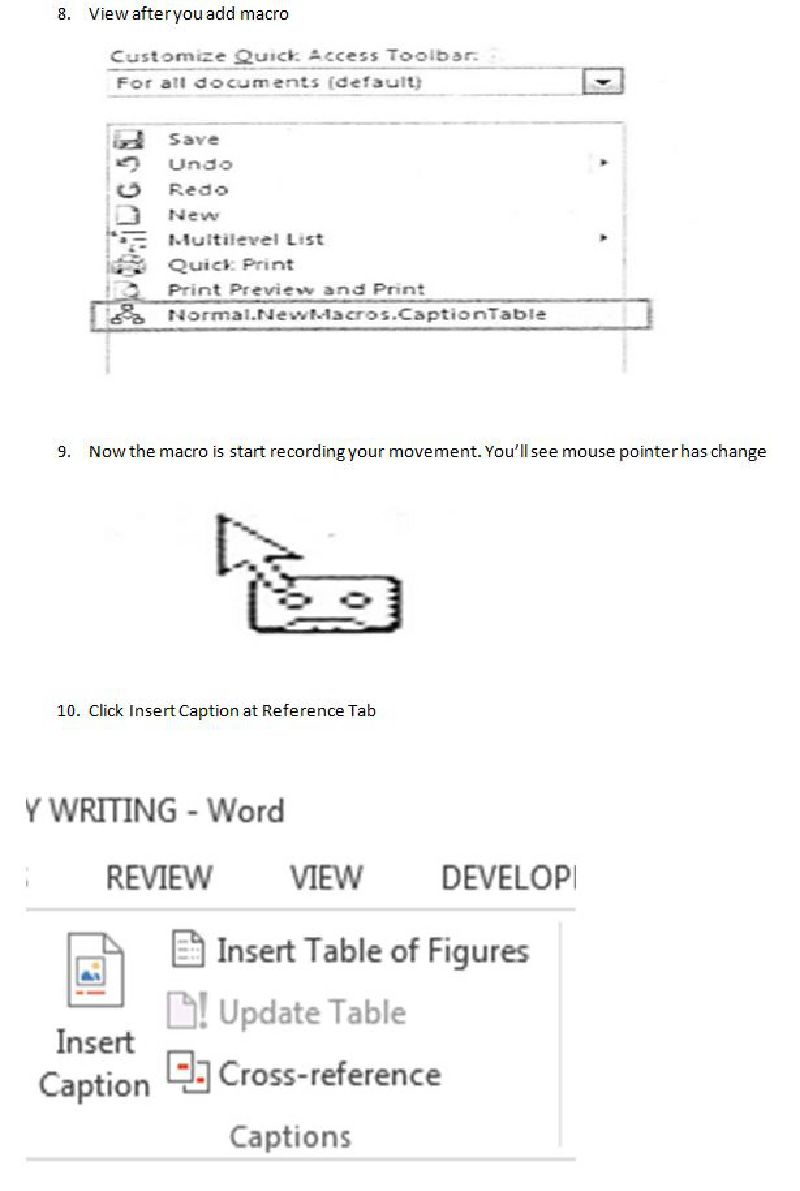 VIEW THE STEPS
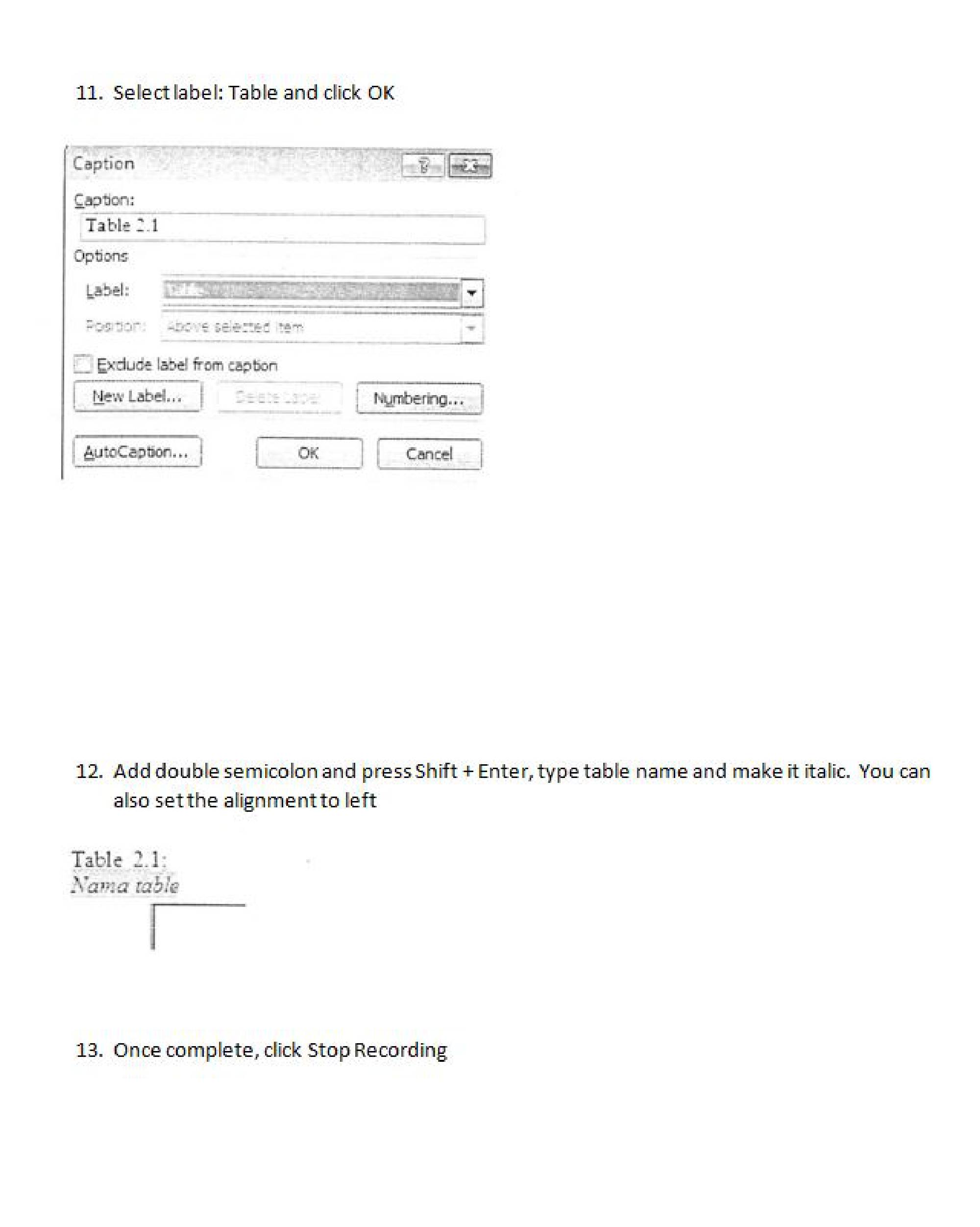
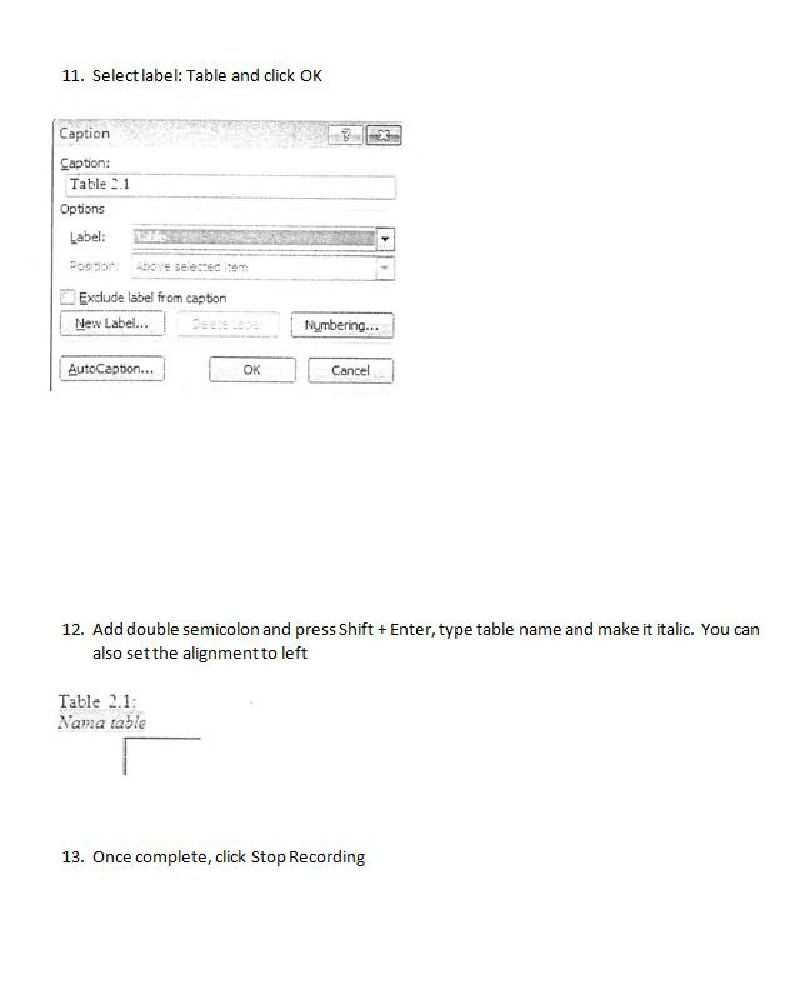 LABELLING CAPTION
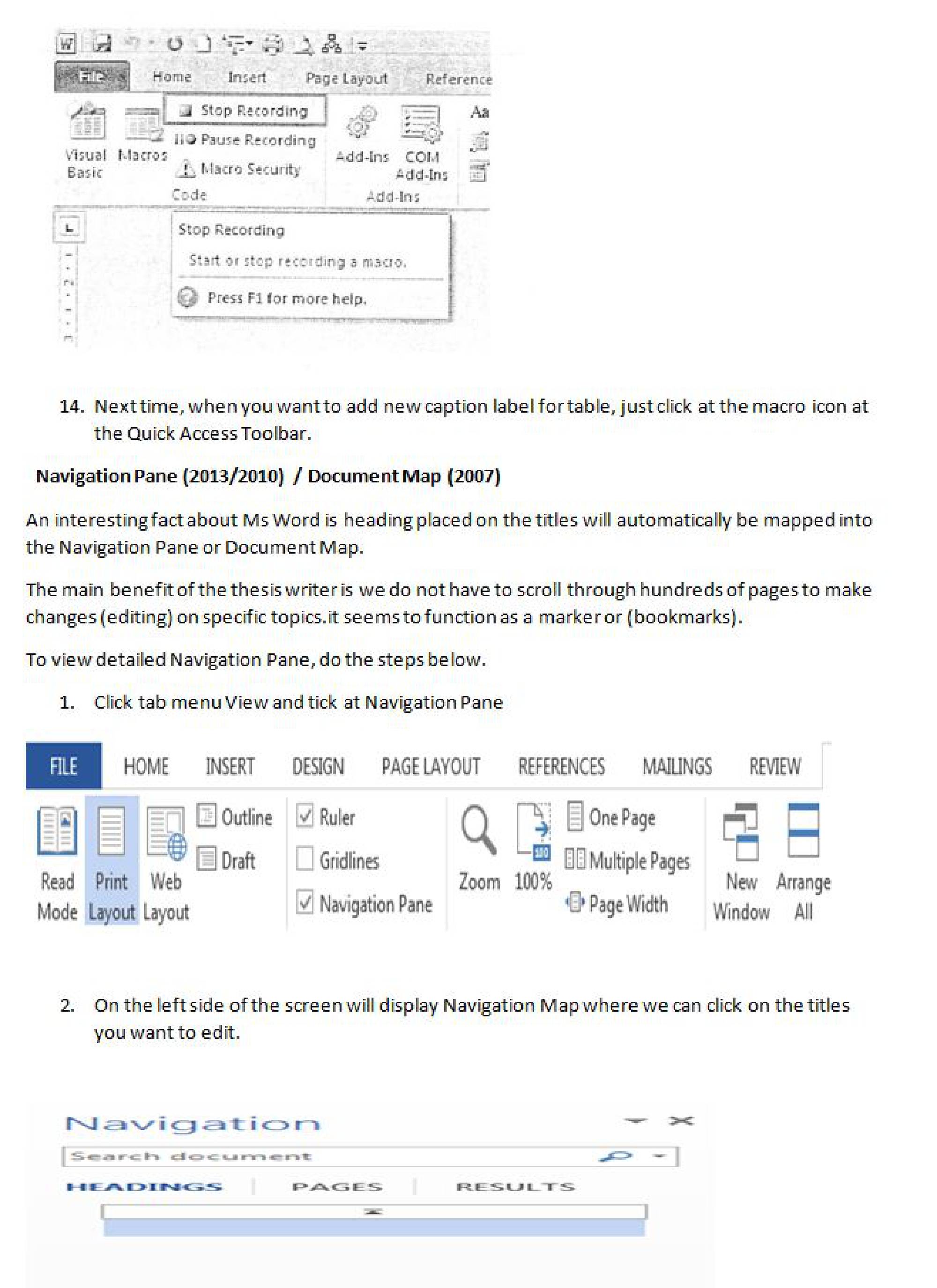
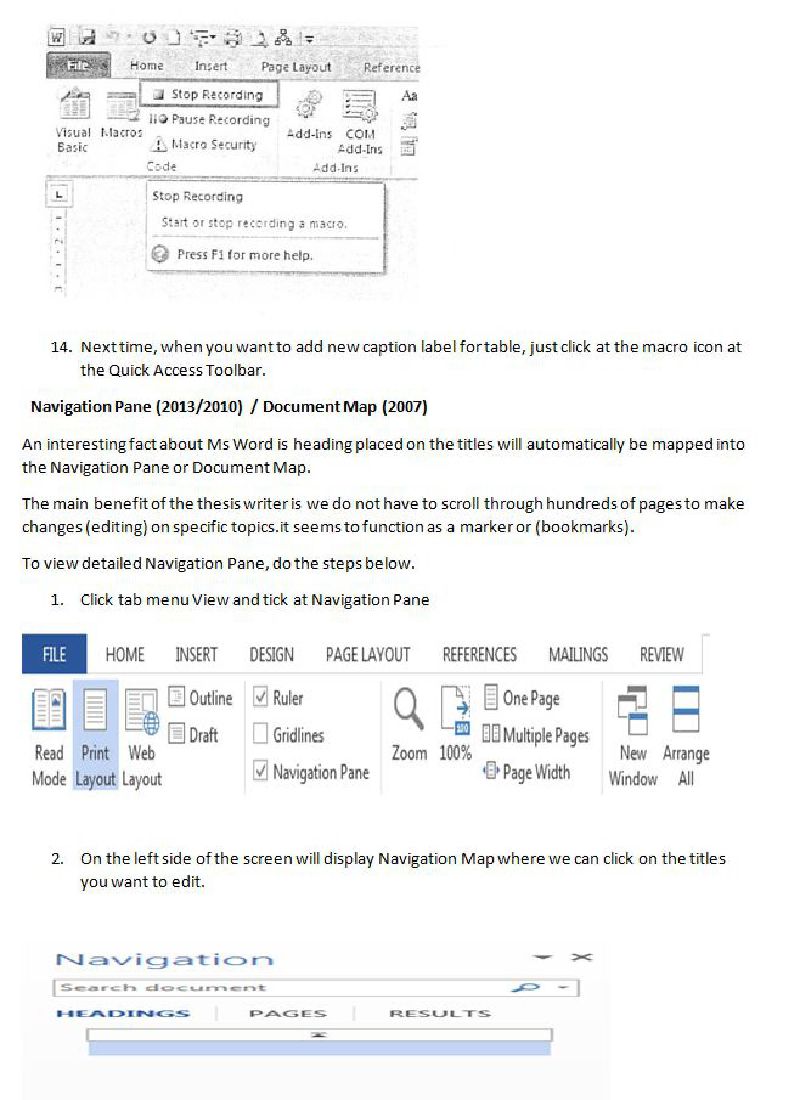 NAVIGATION PANE
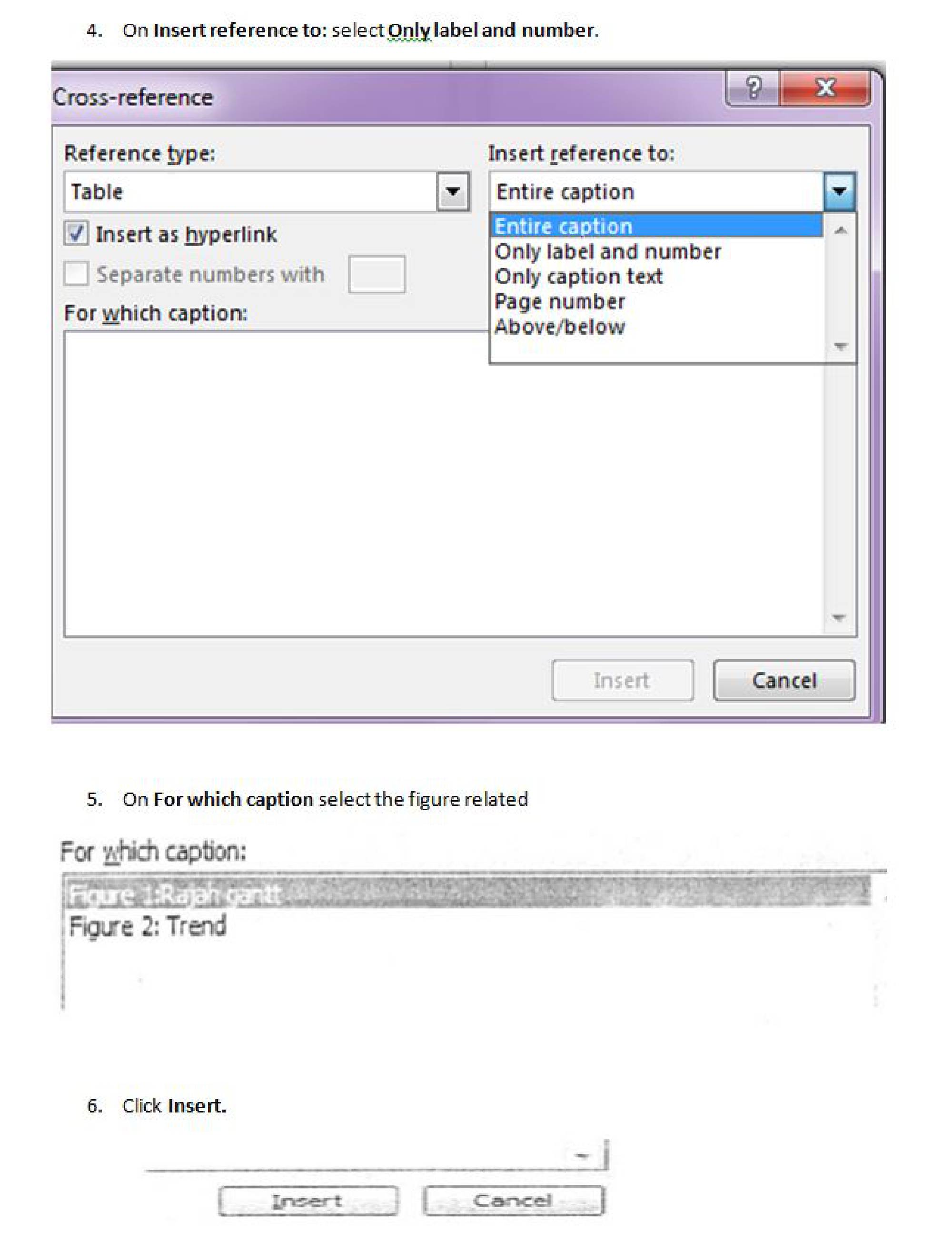
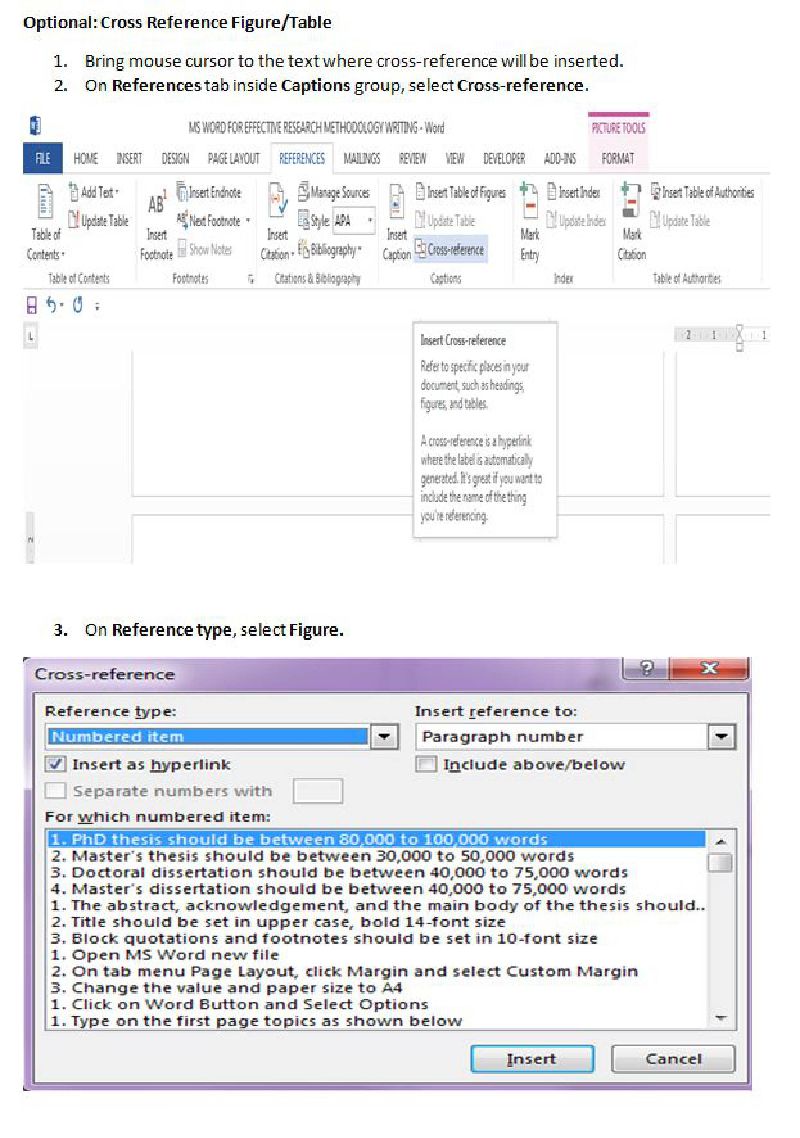 REFERENCE TYPE
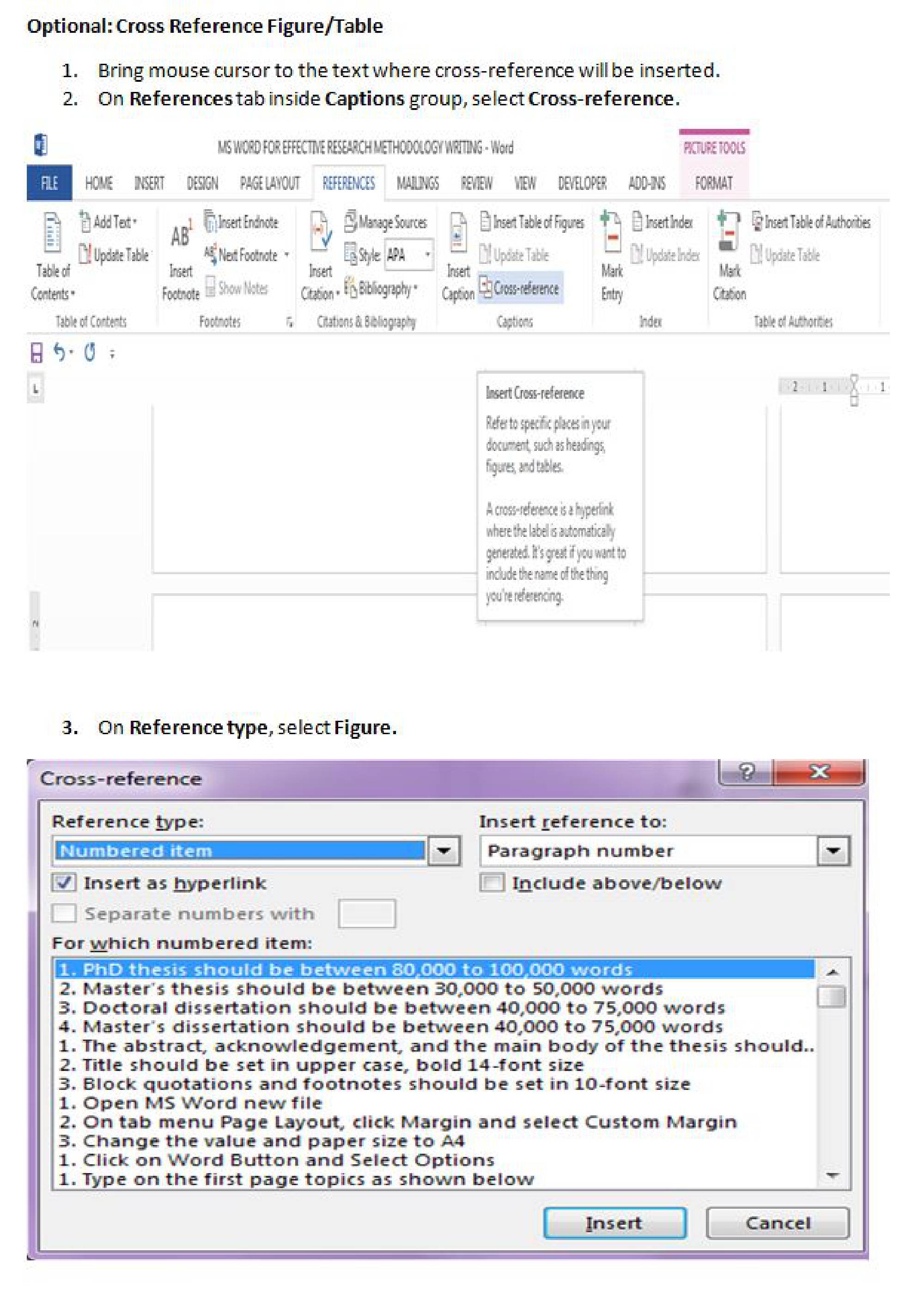
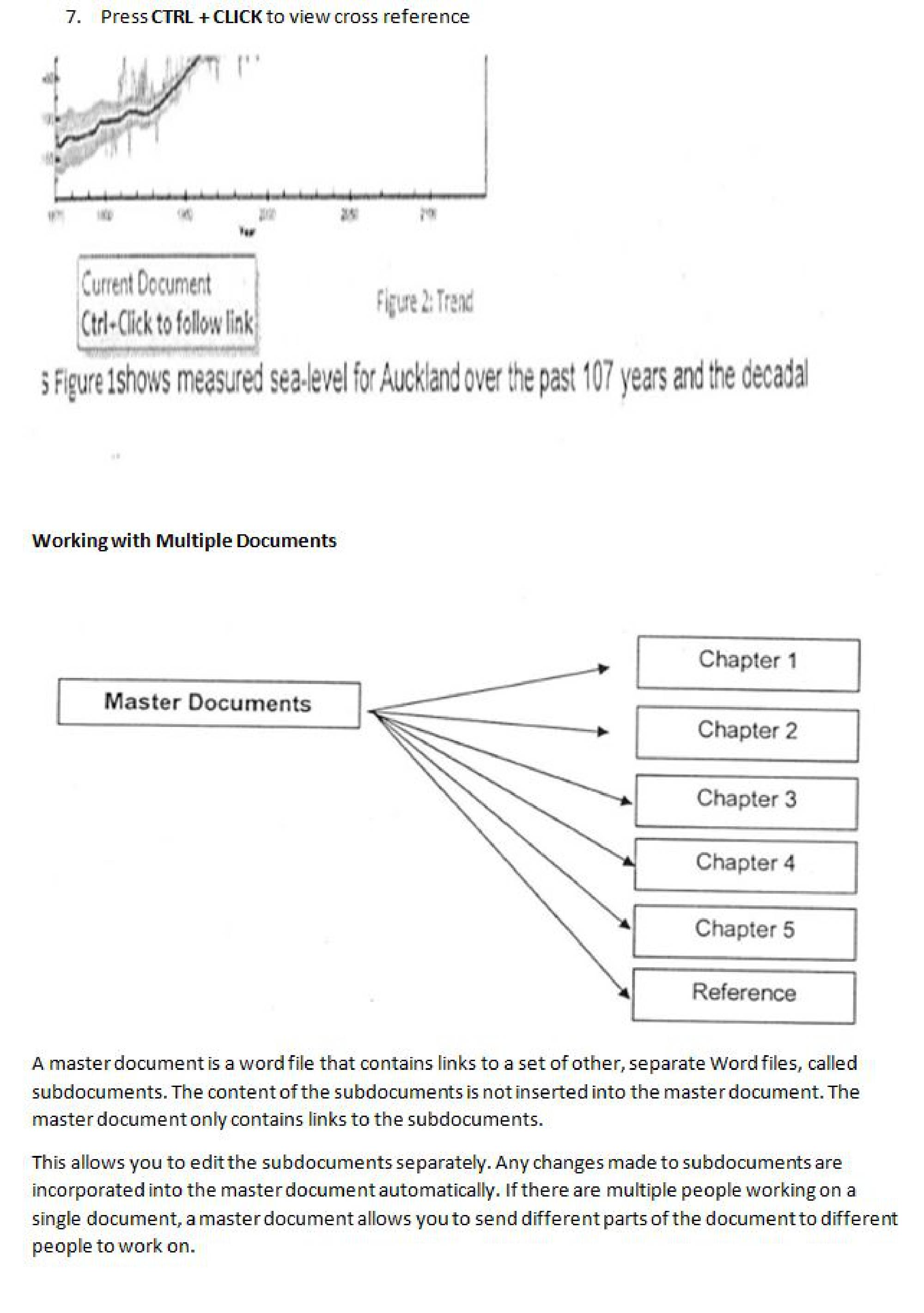
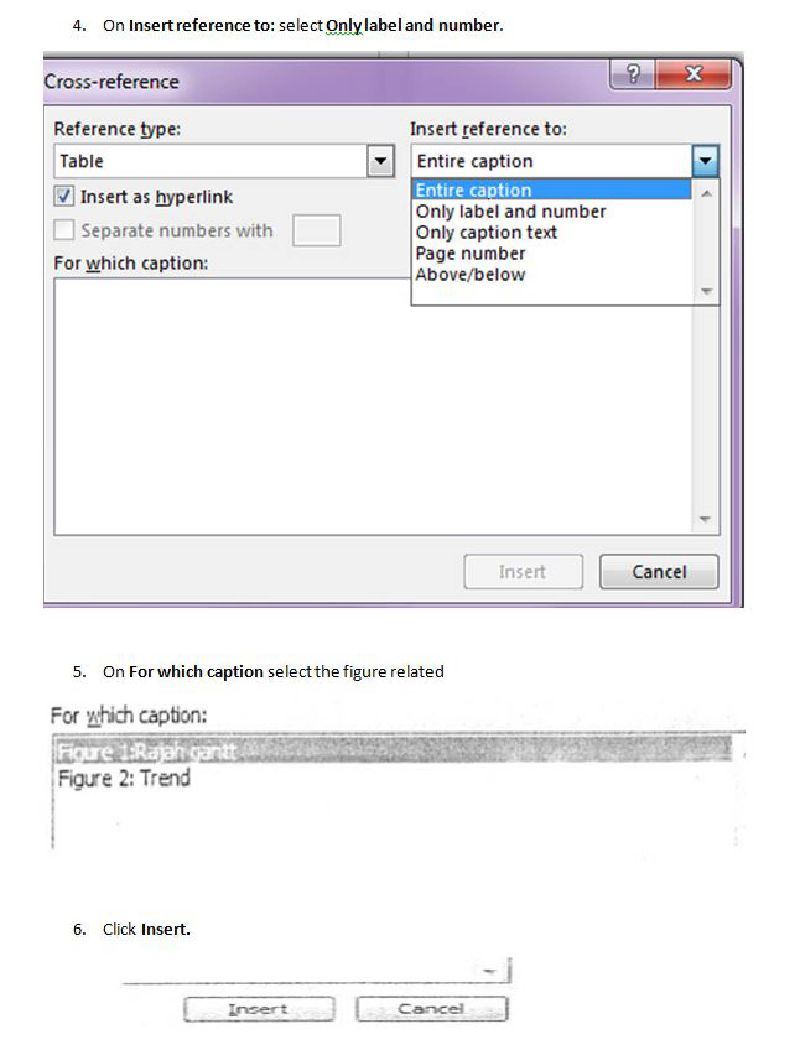 CROSS REFERENCE
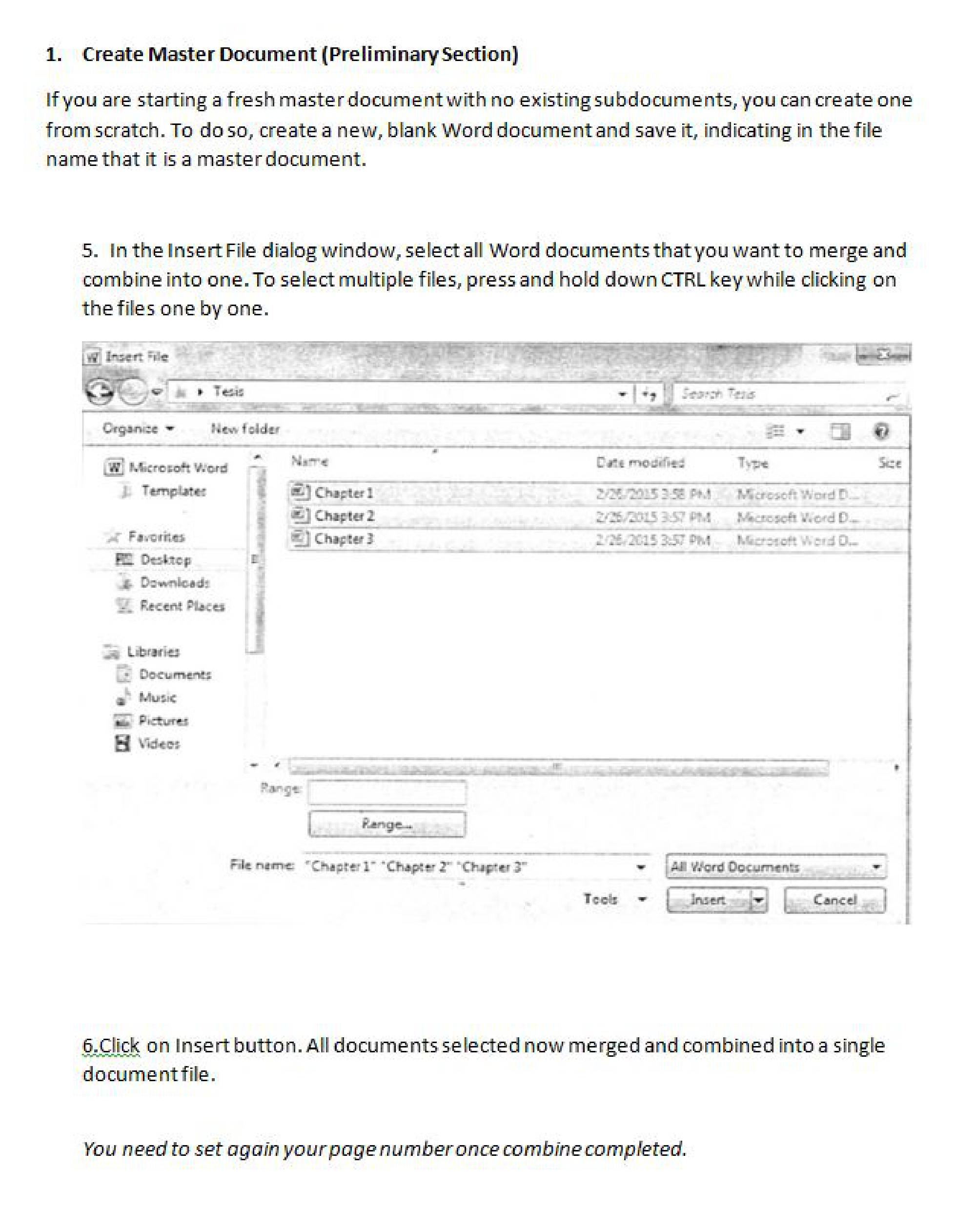
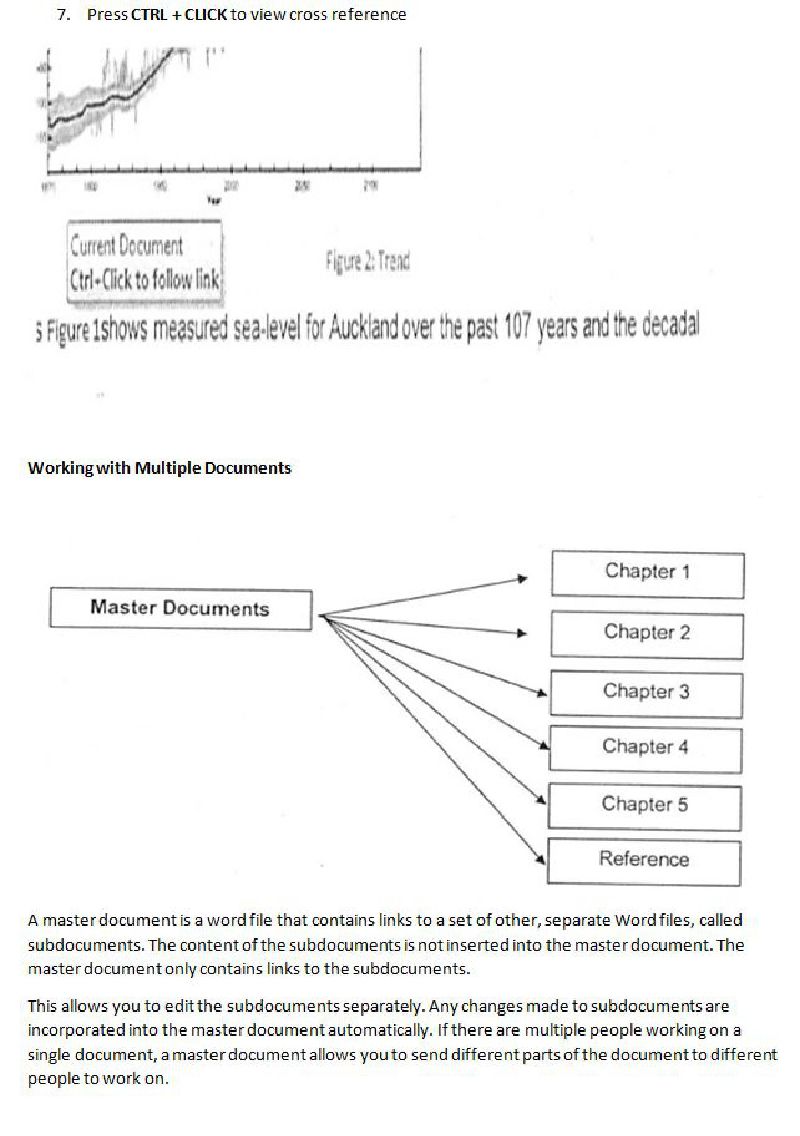 WORKING WITH MULTIPLE DOCUMENT
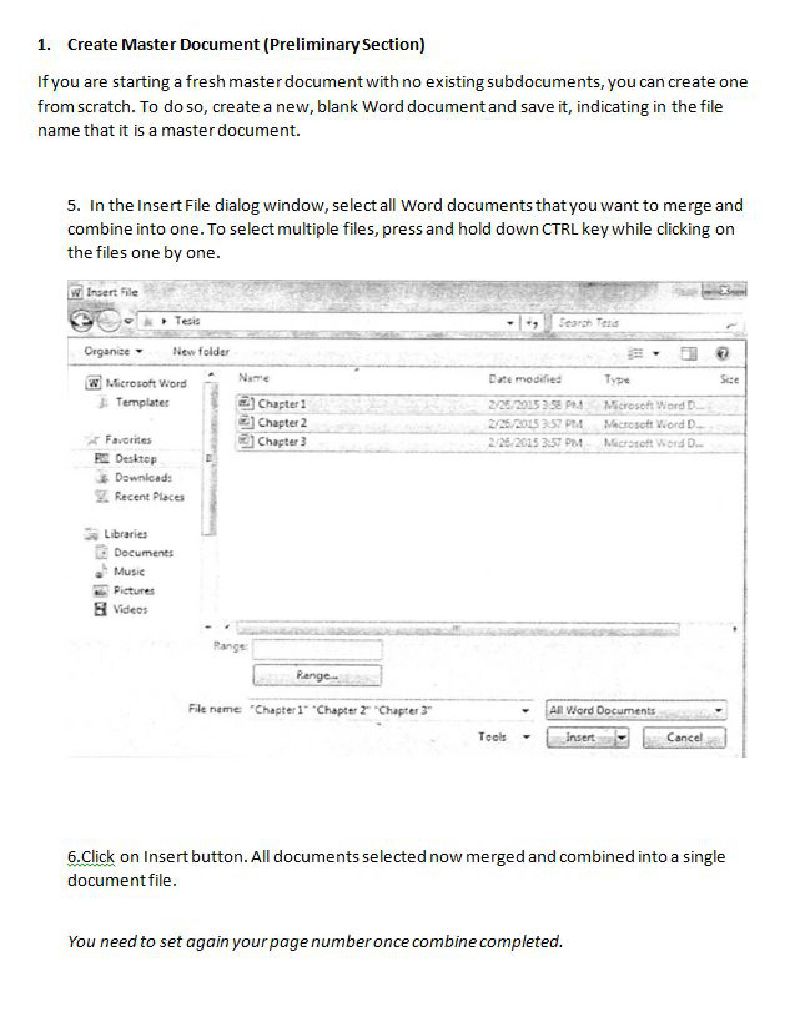 CREATE MASTER DOCUMENT